Knowledge Center
Tax Advantages Most Landowners Miss
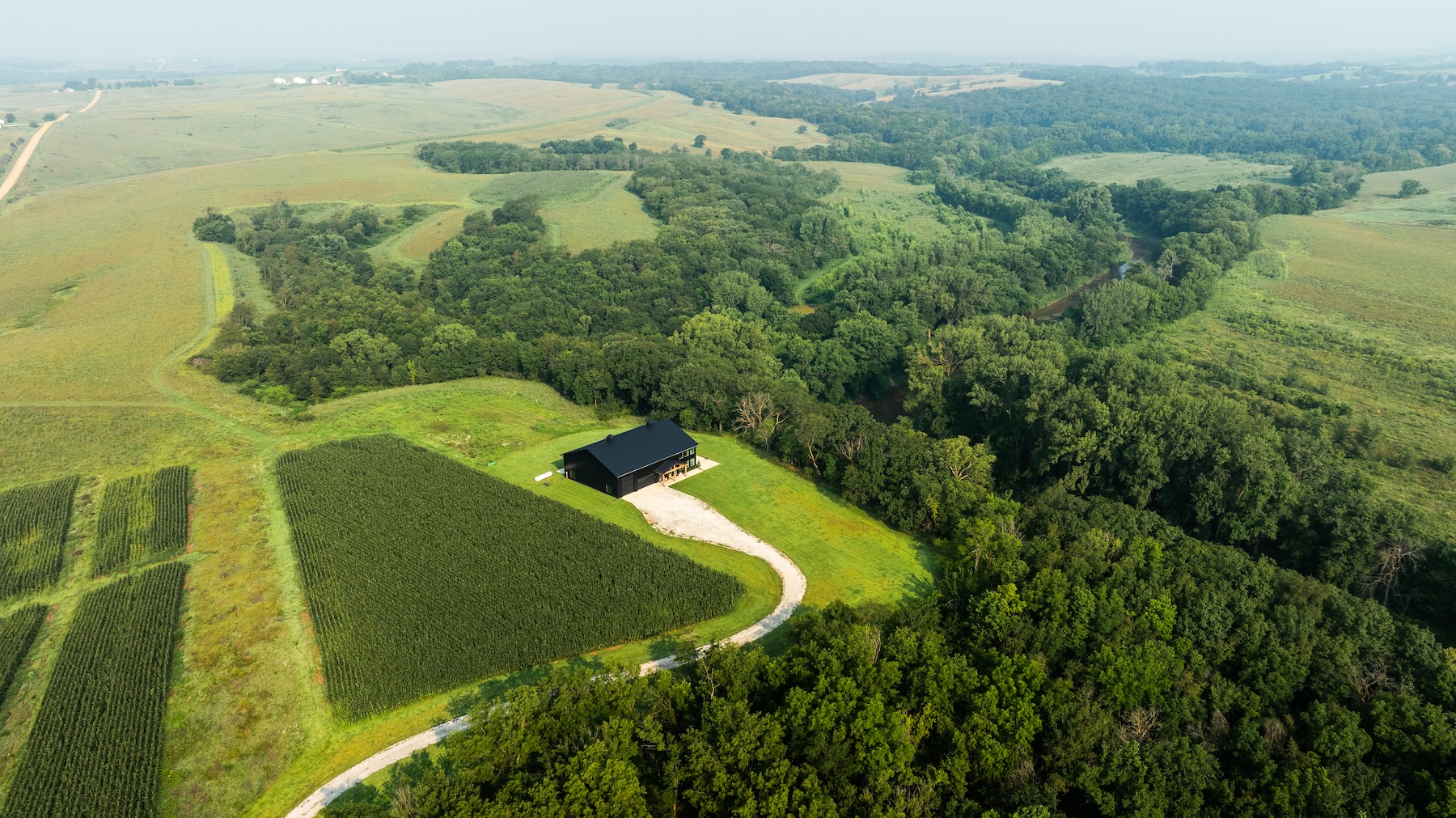
Don’t you already pay enough taxes on land? IRS Section 180, Section 41, 1031 Exchange, and more — there are many land tax breaks, as well as other government programs, available to landowners. Whitetail Properties Land Specialists know quite a bit about that. They work with clients regularly.
“I do a bit of work with the Section 180 Residual Fertilizer Deductions,” said Cody Larson, a Whitetail Properties Land Specialist in Nebraska. “We've helped some guys with some Section 41 research and development tax credits. I think obviously the 1031 is pretty prevalent as far as transferring some of those capital gains into a new property.”
Read on for expert input on a complex topic, including points on tax savings, tax credits, and capital gains. Check out these tax advantages that most landowners miss.
Editor’s Note: This is not financial, investment, legal, or real estate advice. Consult with a financial planner, investment specialist, real estate lawyer, and real estate professional before buying or selling real estate.
Section 180 Residual Fertilizer Deductions
The Section 180 Residual Fertilizer Deduction program is one that allows landowners to deduct the value of residual nutrients in the soil. Generally, the value of the residual nutrients are amortized. However, it doesn’t apply to naturally occurring soil fertility. There are other catches, too. Not every property or landowner qualifies.
“The section 180 Fertilizer Deduction Program has been around since the 60s,” Larson said. “At the time of purchase, or if you inherit a piece of ground, you could put a value on the excess nutrients that are present in the field at time of purchase. If you're participating in the farming enterprise, it can be a good tool, whether grazing cattle or growing crops. You can put a value on that fertility that you bought when you purchased the farm and utilize it as a deduction.”
Of course, this requires third-party soil testing by an approved professional. Lime, phosphorus, potassium, and other components of soil fertility, are analyzed. For those who qualify, a lot of documentation is involved.
Note: Consult a qualified agronomist, financial advisor, tax professional, and Whitetail Properties Land Specialist.
Section 41 Research and Development Tax Credit
The Section 41 Research and Development Tax Credit is part of the Internal Revenue Service (IRS) Code. It’s a federal tax incentive for businesses that elevate investment in qualified research.
“Section 41 is a research and development tax credit,” Larson said. “It's actually a one-to-one credit program. You basically have to provide evidence and support that some of the input purchases that you've made were in the interest of creating some research and doing some studies on new-to-your-operation type of stuff. That's provided a fair amount of value for some landowners.”
Oftentimes, it applies to key activities, such as developing new products, studying new processes, and more. It can be applied to things such as research, involved wages, and necessary supplies. This deduction is dollar-for-dollar, unlike most deductions.
Note: Consult a qualified financial advisor, tax professional, and Whitetail Properties Land Specialist.
1031 Tax Exchange
The 1031 Tax Exchange is something virtually all landowners, and aspiring real estate investors, should know about.
“The 1031 Exchange is pretty straightforward,” Larson said. “If you sell a piece of property, you can move that capital gain into like-kind property. It can be exchanged without the tax penalty.”
This process can be done repeatedly. The tax is deferred until the final property is sold. In short, it’s a method many investors use to grow real estate portfolios much quicker.
“The worst mistake I see made when it comes to 1031's is not notifying your Land Specialist and assuming the process is as simple as selling one and buying another — it is not,” said Whitetail Properties Land Specialist Dave Skinner. “This process must be started prior to closing on the sale of your property. You cannot receive the proceeds from the sale. You must have a qualified intermediary in place to receive and hold the proceeds until such time as you close on the replacement property. And the QI cannot be your personal attorney or accountant.”
The catch? Short timelines to find replacement properties. Basically, everything has to line up well to implement this real estate tax strategy.
“Finding the perfect replacement property can take time, though,” Skinner said. “Typically, the best exchanges happen when the right buyers and sellers collide. Having some flexibility on closings, etc. can make things go more smoothly. If you decide this is what you want to do, call your Land Specialist ASAP. Don't wait. Oftentimes, we can mine our database for the right buyer and seller to make the entire process much smoother and less stressful.”
Note: Consult a qualified financial advisor, tax professional, and Whitetail Properties Land Specialist.
Other Land Programs That Offer Financial Assistance
Government programs are a great way to help pay for the property. But knowing the ins and outs of available funds and programs is vital.
“Some government programs are a great source of income and they're a great way to provide quality wildlife habitat,” Skinner said. “Knowing exactly what program the property is enrolled in is critical to ensure you will be able to continue receiving payments and what maintenance requirements you'll have to meet. You can actually make too much money to be eligible for some of these payments and some types of ownership are not eligible for payments. These instances are very rare, but you need to know about them.
“Programs such as Wetlands Reserve Program (WRP) may offer no future payments and may come with a permanent easement on the property that will severely restrict the owner’s rights as well as lower land value,” Skinner continued. “The good news about these WRP properties is you should be able to purchase it at a fraction of what similar non-WRP properties in the area will sell for. Your local NRCS office will be a great resource for information, but don't expect them to give you specific information about the property you're looking to buy without the seller’s permission. I know this is extremely vague and may be intimidating but there are so many different programs it's hard to be specific.”
Conservation Reserve Program (CRP): The largest program in the nation, it’s run by the Farm Service Agency (FSA). CRP is designed to remove agricultural practices from lands to prevent habitat loss, erosion and water quality degradation. It’s also a great benefit to wildlife.
Conservation Reserve Enhancement Program (CREP): A spinoff of the CRP program, it focuses on the most important environmental issues. Like the CRP program, CREP pays out a sum of money for farmers to pull agricultural practices.
Environmental Quality Incentives Program (EQIP): The EQIP option is a widespread program that is accessible to a wide range of landowners and property types. It focuses on air, soil, water, and wildlife quality.
Agriculture Conservation Easement Program (ACEP): This program provides financial, and at times, technical assistance to protect land, especially wetlands and other habitat types.
Farmable Wetlands Program (FWP): This is geared toward improving and protecting wetlands and wetland buffer zones in agricultural areas. This program pays out annual payments to landowners who are willing to allow qualifying properties to revert back into historical wetland habitat.
Source Water Protection Program (SWPP): A program that protects both ground and surface water. Drinking water that rural residents rely on is the focus. States are ranked for priority based on their population and water quality ratings.
Emergency Conservation Program (ECP): This provides funding and relief for properties that have been affected by natural disasters. It also provides funding for emergency water conservation during times of severe drought.
The Emergency Forest Restoration Program (EFRP): This mirrors the ECP program but is more focused on wildlife habitat. The ECP option is more derived toward farmland. EFRP funds primarily go to restore private land with forestland damaged by natural disasters.
There are also many cost-share programs out there that might not pay you but at least pay to restore the habitat on your land. Don’t overlook programs designed for the preservation of non-game or non-mammal species in your area as well. Regardless of what the program is designed to preserve, it will likely benefit all or most wildlife.
Of course, understand the legalities of the program and be completely certain it’s a good move for your land management, wildlife management, and financial planning goals. Also, there are federal, state, local and private partnerships and programs to consider. Look at each of your options carefully.
For more assistance, contact one of your local Whitetail Properties Land Specialists today.