Knowledge Center
A Guide to Shed Hunting (And 10 Shed Hunting Questions Answered)
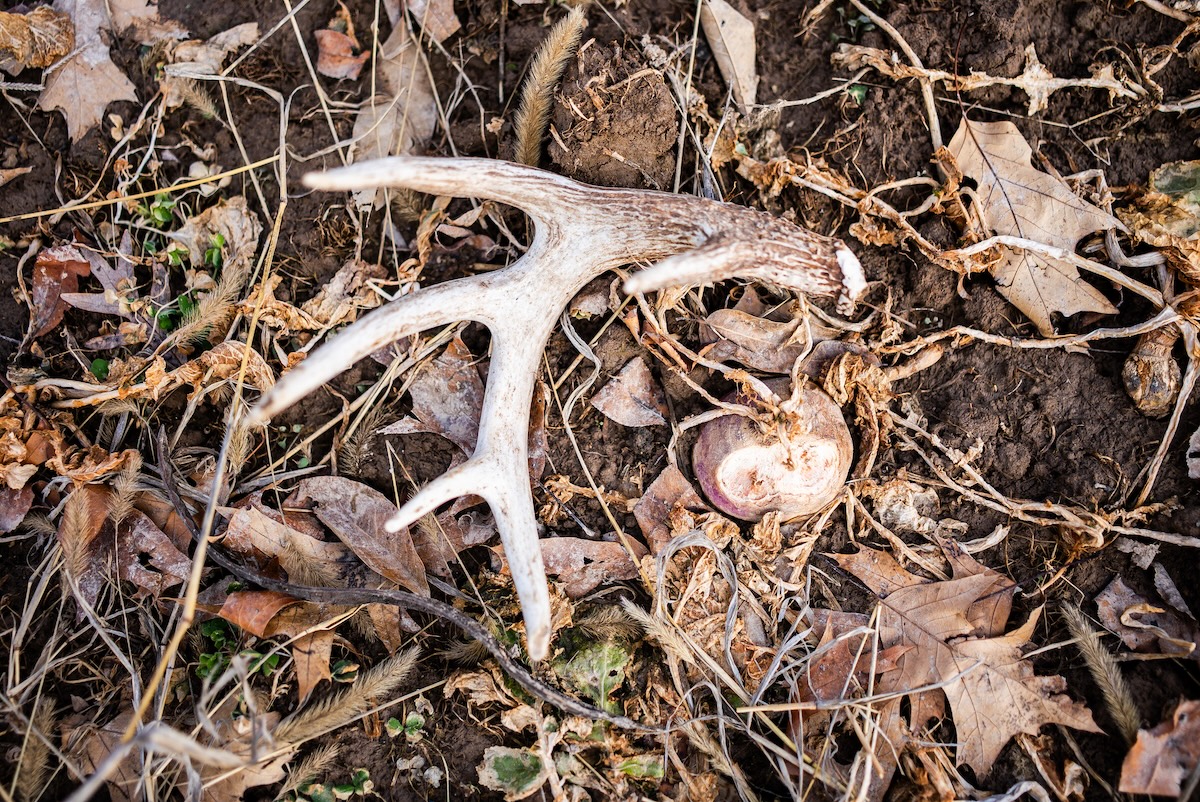
Shed hunting is an American staple. Every year, millions of hunters strap on their Lacrosse boots crank up their John Deere Gator, and hit the woods in search of white gold. It’s a way of life for millions, and the time to find white gold is now.
Some people are new to the game, though. Others aren’t but have more to learn. Many shed hunters still have questions, such as:
1. Why do deer shed their antlers?
2. How do deer shed their antlers?
3. When do deer shed their antlers?
4. What is shed hunting?
5. Why is shed hunting beneficial?
6. When are the best times to shed hunt?
7. What are the best conditions for shed hunting?
8. Where are the best places to shed hunt?
9. What are some shed hunting tips and tactics?
10. Why is shed hunting so popular?
Read on for the answers to these questions, and more. Here’s how to shed hunt, with answers to your shed hunting inquiries.
Why Do Deer Shed Their Antlers?
Whitetails, which go by the scientific name Odocoileus virginianus, are members of the cervid family. As such, they shed and re-grow their antlers each year. Interestingly, it’s the fastest-growing tissue known to man.
Of course, bucks’ antlers grow larger with each age class. Bucks grow smaller antlers at 1 ½, 2 ½ and 3 ½ because more resources must go to bodily growth, such as bone structure (which peaks at 3 ½) and muscular development (which peaks at 4 ½). Therefore, because resources are freed up for other things, antlers hit peak growth between 5 ½ and 8 ½ years old.
Without the shedding process, that annual regrowth doesn’t happen. Plus, it allows deer to lower stress, carry less weight, and recover from the previous breeding season. It’s easier to survive winter without these atop their heads.
How Do Deer Shed Their Antlers?
The antler shedding process is triggered by decreasing testosterone levels, which is driven by photoperiod (daylight length). Once testosterone drops so low, and hits certain thresholds, the antler shedding process begins.
At a certain point, osteoclasts begin to degrade the bone connection that attaches the antler to the skull. Ultimately, it dissolves the bond in the pedicle, and once loose enough, the antler falls off. Soon, the antler growing process begins all over again.
When Do Deer Shed Their Antlers?
Most whitetails in North America shed their antlers between December and March. This takes place after the breeding season, and the bulk of fighting and reproduction is over for the year. All bucks do not shed at the same time, though. It’s a wide range, and antler shedding windows vary due to numerous variables.
As noted above, the two biggest factors that impact when deer shed their antlers include photoperiod (daylight length) and decreasing testosterone levels. That said, other things can impact the antler drop as well. Injuries, illness, herd social stress (i.e.: too many deer), predatory stress (i.e.: wolves), severe weather (significant and lasting cold), and poor nutrition, can lead to sooner, faster, and sharper declines in testosterone, which spurs early shedding.
In contrast, good health, plenty of food, lack of stress, and longer-running ruts (which keeps testosterone elevated), can lead to longer antler retention and later antler shedding dates. Age impacts shedding, too. Typically, older bucks shed earlier than younger deer.
Regional influences also matter. For example, deer in the North and Northeast, such as Iowa, Maine, Minnesota, Wisconsin, Michigan, and others, typically shed earlier than deer in the southern half of the country.
Deer that live in other countries, such as those found in South America, Europe, and New Zealand, are on different shedding cycles altogether, due to variations in seasons around the globe.
What Is Shed Hunting?
Shed hunting is the activity of finding antlers cast by whitetails and other cervid animals. Shed hunters recover these by searching areas commonly frequented by deer. These individuals walk or ride through the countryside in hopes of scooping up white gold. It’s a non-consumptive style of hunting that involves the search for naturally dropped antlers.
Why Is Shed Hunting Beneficial?
Shed hunting is beneficial for multiple reasons. It’s a great opportunity to complete low-pressure scouting. Study bedding areas, food sources, travel routes, and more. Know where deer spend the most time.
“From a deer hunting and land management strategy perspective, all of the sign is still fresh,” said Whitetail Properties Land Specialist Kyle Karcher. “As a landowner (or land manager) this an opportunity to go in some areas that you try and stay out of the rest of the year. That's one reason why I always look forward to shed hunting.”
Piece together how deer use the property and better understand how to hunt it. Study where deer were likely spending their time while avoiding late-season hunting pressure. These will likely be the same places in future seasons.
This also plays into the inventorying process. Determine which bucks made it through the hunting season, and even late winter. Then, drill down on buck core areas, as well as deer behavior, which also lend well to future hunt planning.
Furthermore, it’s fun to find cast antlers. It’s even a great way to spend time with family and friends. In some cases, very large sheds hold significant value, and antlers in general have a value per ounce or pound.
When Are the Best Times to Shed Hunt?
In most situations, the best time to shed hunt is after the majority of deer drop their antlers. The caveat is that, if you know a very large deer dropped its antlers, it’s sometimes prudent to move in and find those even before other deer shed. This is especially true on public land and on private properties where others might find the white gold first.
If a singular large buck isn’t in question, and collecting the most shed antlers possible is the goal, it’s better to wait until the majority of the herd loses its headgear. Most shed hunting takes place in March, but some hunters begin finding quite a few in February, especially in northern areas.
“With shed hunting, this time of year, you can go places that you're not worried about disturbing the deer,” Karcher said. “You can take the family, kids, and friends, and walk around. It's just a great time.”
What Are the Best Conditions for Shed Hunting?
Calendar dates aside, certain conditions can make shed hunting easier or more difficult. Spend time shed hunting when these are in play.
“Utilize the sun (or lack of it) to your advantage,” Karcher said. “If it's cloudy, especially when in the timber, there aren’t a lot of shadows being cast. It's harder to see sheds on bright sunny days.”
Now, if you do have a bright sunny day, you know, I'll usually assess where the sun is in relation to me. I’ll see where I can naturally see the best and use that to my advantage.
“Also, I can see better with the sun coming from my back,” Karcher continued. “Sometimes, that sun just hits the beam of a shed perfectly and lights up better than on a cloudy day. So, when the sun is out, use that advantage.”
Conversely, in the timber, and areas with a lot of obstructions that can blend with antlers, are better suited with overcast skies. These are the best days to spot sheds in cover.
Of course, it’s important to find sheds before spring green-up. Emerging vegetation limits your ability to see sheds. It also gives other shed hunters and scavengers time to find antlers before you do.
Where Are the Best Places to Shed Hunt?
Some areas produce more shed antlers than others. As shed hunters, it’s good to maximize your odds of discovering these. After all, where you find one, you’re likely to find a lot more.
“In my opinion, it’s not the most well-known bedding cover, but I have found so many sheds in waterways that lead up to crop fields,” Karcher said. “Most of the time, those bucks are not laying in those waterways during the day. But they go out into those fields at night. They'll feed and come back to bed in those grassy waterways to chew their cud. They also stage up, walk those low areas, and browse up into the field as it gets darker.
“Of course, they mostly bed in the timber for their daytime beds,” Karcher continued. “But on south-facing slopes, they're getting sunshine.”
Karcher loves well-used water sources as well. In and around those, fallen antlers are easy to see. He’s had incredible success in these spots. You might even scoop some sheds around the edges of creeks, ponds, and streams.
Some food sources tend to produce more shed antler drops than others. Deer are concentrate selectors, and with that, target very specific food sources with purpose. It’s based on as much nutritional need as availability, if not more so.
It’s also about timing. The window in which most bucks shed their antlers largely coincides with the late winter and early spring green-up. Therefore, as deer flock to these foods that turn green first, it’s natural that antlers are cast within these locations.
“You’d think grain food sources would be the best, and I certainly find them in and around late-season grain, but of all the different food sources, there’s something better,” Karcher said. “Here in the Midwest, of all the grub, I find the most sheds in the first green-up food sources. So, that’s usually clover or alfalfa fields.”
In addition to bedding areas, food sources, and water sources, try other key areas as well. These include travel corridors, major trails, minor trails, log jumps, fence lines, fence crossings, creek crossings, and other obstacles where deer are likely to jar loose headgear.
What Are Other Shed Hunting Tips and Tactics?
While shed hunting, implement strong strategies. Identify pinch-points. Target strategic land features, such as benches. Look on misty-rainy days. Use binoculars. Move slowly. Change perspectives. Re-check areas you’ve already searched.
Riding a John Deere side-by-side in open fields, and even CRP ground, can save energy and help cover more ground. Wearing a protective outer layer of SITKA solids, which helps prevent pokes, pricks, and sticks from sharp objects (i.e.: briars). And use a hunting app to track what you’ve covered. Sometimes, you’ll leave gaps when grid searching.
“Cover a lot of ground,” Karcher said. “Depending on your goals, if you're looking for a specific deer, you must cover every square inch of that thing until you find the sheds that you're looking for. But outside of that, whether it's riding a four-wheeler or just walking all the edges, it seems to be a numbers game. Cover as much ground as possible and you'll find more shed. It seems simple, but I've seen it work better for me to exhaust an area.”
Why Is Shed Hunting So Popular?
Shed hunting is a very popular outdoor activity. Even people who don’t hunt enjoy the adventure of searching for and finding white gold.
“In my opinion, it's a great way to include the family,” Karcher said. “Get outside while the weather is warming up. We've been all through the winter. Shed hunting is just a great activity that you can do with friends and family.
“The camaraderie is there, too,” Karcher continued. “Usually, when deer hunting, you're sitting by yourself. If not, maybe there is one other person.”
Above all, exhibit strong shed hunting ethics. If present, follow all state and local shed hunting laws. Don’t use shed traps. Never harass or push deer. Spend time shed hunting but do your best not to apply undue pressure onto the deer herd.
Then, have fun. Shed hunting is about the thrill of the search. There’s no doubt, it captures the hearts of many each year. Participate in the Whitetail Properties Shed Rally event to add even more fun.