Knowledge Center
How to Select the Perfect Hunting Backpack
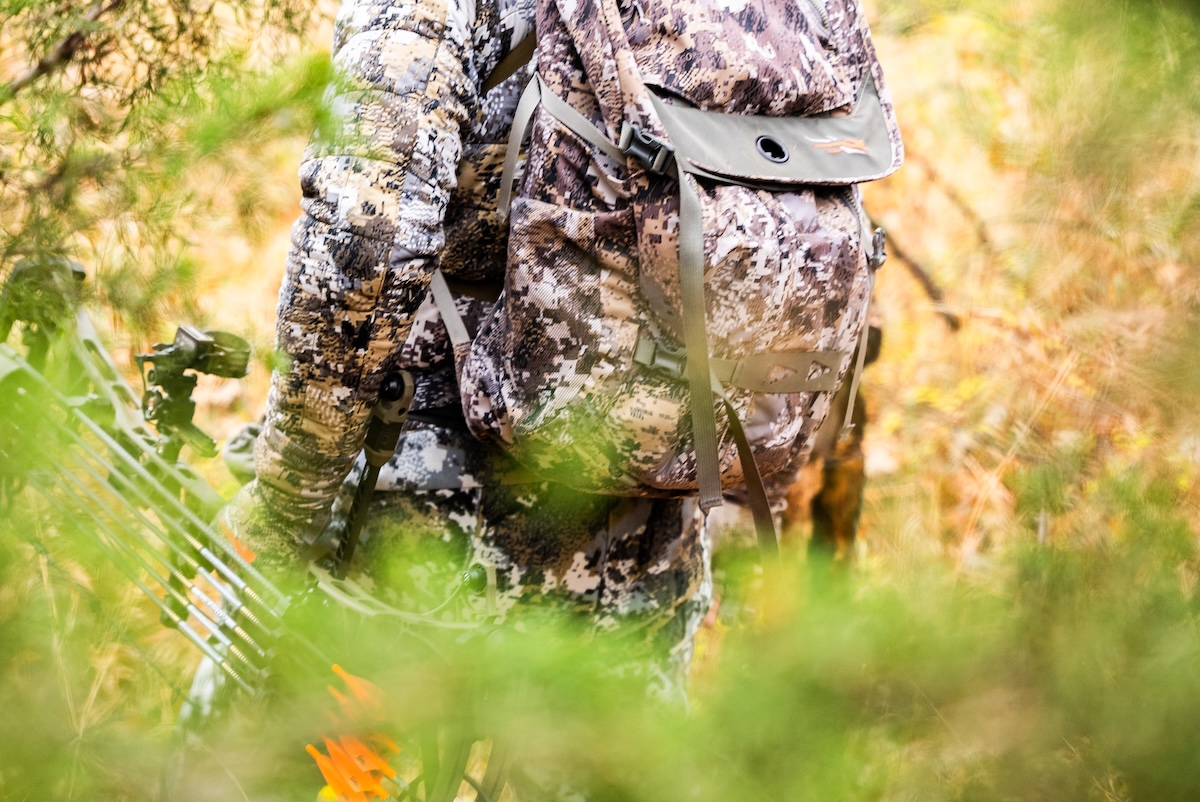
Hunting packs are among the most underrated gear items in the hunting realm. Whether chasing squirrels, turkeys, whitetails, or bigger game, you need a good pack to tote the essential items. That said, selecting the right one can be challenging. So, are you in need of some good gear haulers, but don’t know how to select the perfect hunting packs? Read on and check out what you should know about selecting the best hunting backpacks.
Hunting Backpack Terms to Know
Hunting backpacks aren’t rocket science, but over the past several decades, these have been fine-tuned to near perfection. Each one is built with a specific purpose in mind. Thus, there are key hunting backpack terms to know.
Pack Type: Every pack is designed with a job in mind. Some are smaller, larger, or somewhere in-between. For example, these are often labeled as “day packs,” “multi-day packs,” “expedition packs,” “waist packs,” etc.
Frame Type: Backpacks come in a variety of frame types and structures. Examples include “internal frames,” “external frames,” “meat haulers,” “meat shelves,” and more.
Strap Types: Packs have various straps and methods to secure gear. Examples include “load lifter strap,” sternum strap,” and others. Plus, “gear loops,” “lashes,” etc.
Pack Fit: The “pack fit” is the description of how it conforms while wearing it. Hunters need a “pack fit” that works for their body type.
Cubic Inches: Hunting packs are measured in “cubic inches.” This measurement describes the volume of contents these can reasonably carry. Generally, for “multi-day hunts” in the backcountry, the rule is 1,000 cubic inches of space for every day on the hunt. This provides room for necessary items to use on the hunt. If you plan to hunt more than three to four days, it’ll require more gear and pack space. Oftentimes, a drop camp is needed, and gear should be packed in on horses or UTVs.
Miscellaneous Terms: Additional terms to understand include “hydration compatible,” “torso length,” “ventilation channels,” “front loading,” “top loading,” “weapon carrying,” and more.
What Are the Key Components of a Good Hunting Pack?
One of the most important pre-hunt skills a hunter must possess is knowing how to pick the right hunting backpack. They must understand the key features of a really good pack. So, in terms of good hunting pack components, what do you look for? In short, good packs exhibit the key terms outlined above and more.
“It depends on the scenario,” said Whitetail Properties Land Specialist Dustin Pavelski. “Typically, where I'm hunting up in the Northeast, I need a lightweight pack that's small but can be expanded out.
“This is geared a bit more toward the tracking aspect,” he continued. “You want to be quick and light. For where we are up in the Northeast, if you're trying to track, you need something smaller. When you shift to a blind, you can use something a bit bigger. To take your stuff for an all-day sit, choose something feasible that prioritizes comfort — you definitely can't get away from comfort.”
In other words, you must attune your hunting pack to the style of hunting you’re implementing. There is no one backpack that does all things. Packs are much more specialized than most hunters realize. A waist pack isn’t a day pack isn’t a multi-day pack isn’t an expedition pack. Each of these serve niche roles.
“I don't see a vision to have one backpack that meets all purposes,” Pavelski said. “I just haven't found one of those yet. Maybe they're out there, but I haven't found one. So, you have to plan according to your trip.
“Sometimes I'm hiking 6 miles in and trying to track a deer for another 8 miles,” he continued. “You have to go very light, but you also have to be prepared in case something comes up. Of course, if you're just going a half mile into the blind for the day, then you can adjust based on that.”
As Pavelski said, there isn’t a one-size-fits-all hunting backpack. Like other gear, packs must also be selected deliberately with purpose in mind. You also must know your strengths, weaknesses, and other personalized needs.
“Prioritize shoulder support,” Pavelski said. “Sometimes, I even run a fanny pack, and when I do that, I wear good shoulder straps.”
Most hunters need the extras associated with packs, too. For example, lashes, additional straps, smaller pockets — these and more are important elements of a good pack. It’s helpful to have a variety of options on packs that can house all the different gear you're taking afield.
“I think having several extra straps and pocket options is great,” Pavelski said.
Implementation of quieter straps and buckles is impactful as well. Maybe it’s quiet out with no wind. With these conditions, deer and other game hear much easier. Perhaps you’re hunting close to bedded deer or other game. Regardless, quieter buckles, straps, and zippers are a must-have.
“Sometimes, the lack of noise can make all the difference, especially when you're back in the big woods,” Pavelski said.
What Is the Typical Weight Capacity of Hunting Backpacks?
Backpacks weigh different amounts. Make and model can significantly change how much a pack weighs. There can even be major differences between packs offering the same or comparable cubic inch volumes. Choose a pack within your budget that offers the cubic inches and weight capacity to match your needs.
That said, the typical weight capacity of the average day backpack is approximately 35-40 pounds (some are 50 pounds). For multi-day packs, that range rises to 75-100 pounds. Oftentimes, with expedition packs, the number is 100 pounds, and oftentimes greater.
How to Choose the Right Size Hunting Backpack
Much is involved with selecting the right hunting backpack. The first consideration is the number of days on the hunt. Are you a single-day deer hunter? Will you be back home or at camp after the hunt? If so, a day pack should work just fine. If hunting multiple days in the backcountry, you must have something more robust and attuned to specific hunting, safety, and other utility needs. That demands a multi-day pack or expedition pack.
Choose the pack with the correct frame for your hunt type, load expectations, and more. This is crucial for effectively toting, protecting, and using the gear needed for the hunt. Additionally, purchase a pack that offers weather resistance, meat-hauling abilities, etc.
Focus on pack fit, too. Adjust the torso length, hip belt, chest straps, and other key components, to ensure the utmost comfort. This properly distributes the load for the most comfortable carry. It also removes some of the weight from your shoulders and places it on the back and hips.
How to Learn and Care for Hunting Backpacks
It’s incredibly important to learn how to use your hunting backpack. Everything must have a dedicated, permanent spot, and hunters must memorize where everything is at. That way they don't have to spend a lot of time searching for needed items. Sometimes, you only have seconds to find what you require before it’s too late. That calls for knowing exactly where the item is.
Examples:
- There’s a buck walking away. Where’s my grunt tube?
- I just shot my three rounds and missed, but the deer is still standing there. Where’s my extra ammo?
- It’s 35 degrees, a rain shower is on the horizon, and it’s barreling down on my position. Where’s my rain jacket?
- I tripped, fell, and cut open my leg on a sharp rock. I’m bleeding out. Where’s the tourniquet?
These are only a few of many scenarios where pack memorization can be the difference in a tag filled or unfilled, injury or illness avoided or experienced, or even life and death.
“No matter what kind of pack you use, you must learn it,” Pavelski said. “In the military, you have everything memorized down to what pocket it's in. Even if you have to make a list, put it on your phone, or leave a piece of paper in your wallet — you must memorize that pack. Knowing where all your stuff is located is key for any type of scenario. That’s true for general deer hunting, or something more serious that might happen.”
In addition to learning your pack, hunters must also care for it. If it gets wet, remove all items and allow it to air dry. Place it beside a large fan and dehumidifier to pull all moisture out of it. Leaving it wet can lead to molding, mildewing, and ruined gear.
SITKA Quick Looks: SITKA Tool Bucket and Tool Belt
SITKA offers an array of great hunting pack options. Two of these include the SITKA Tool Bucket and SITKA Tool Belt. Each is incredibly resourceful, and these have their respective places on the hunt. Check out some of the important details below.
SITKA Tool Bucket
Those looking for the ideal daypack should consider SITKA’s Tool Bucket. It’s great for organizing and hauling your hunting gear in and out of the field. It’s perfect for those half- or all-day hunts in the woods. It’s perfect for hanging your gear in the tree or keeping it contained on the ground.
The Tool Bucket comes with 17 storage compartments. It provides a total capacity of 1,800 cubic inches. The pack weighs 3 pounds 2.1 ounces (1,420 grams). It’s available in Optifade Cover and Optifade Elevated II. It has a 4.9 star review rating. MSRP was recently reduced from $290 to $217.
SITKA Tool Belt
The Tool Belt by SITKA is ideal for those going on a half- or full-day hunt that require less gear hauling capacity than what the Tool Bucket provides. This straps around the waist, and rests against your lower back. It also comes with optional shoulder straps to further distribute the load. Despite being smaller than a day pack, it still provides exceptional, and smart, storage availability — all in a low-profile package.
The Tool Belt offers 600 cubic inches of storage. This unit weighs only 34 ounces (hip pack) or 41.5 ounces (pack and straps). It’s offered in Optifade Elevated II. It offers a 4.8 star review rating. MSRP was recently dropped from $239 to $119.50.