Knowledge Center
The Basics of Dairy Farming for Landowners and Buyers
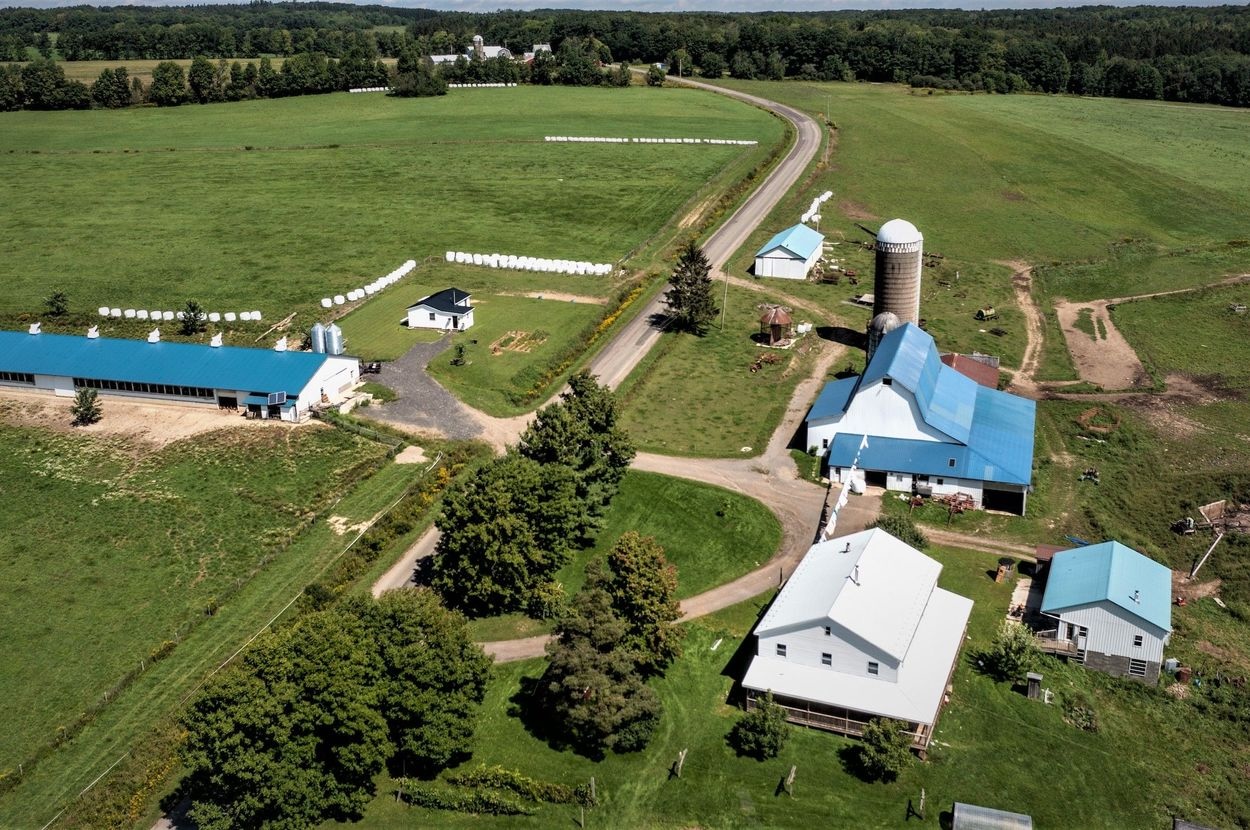
One American lives the agricultural lifestyle from sunup to sundown 365 days per year. Another doesn’t know a bull from a cow or Grade A from Grade B milk production. That’s OK, though. To run a nation, it takes all kinds of kinds, right? It sure does.
Even so, you might wonder, what is dairy farming? Is dairy farming intensive? Or how to start a dairy farm?
Ask Tim Kent, a Whitetail Properties Land Specialist in New York, about the nature of dairy farming, and his first reply is, “They make milk.”
Jokes aside, Kent is quite knowledgeable of dairy operations. He’s even sold a few for Whitetail Properties. Read on for the basics of dairy farming for new farmers and potential buyers.
Editor’s Note: This is not financial, investment, legal, or real estate advice. Consult with a financial planner, investment specialist, real estate lawyer, and real estate professional before buying or selling real estate.
Understanding Dairy Farms
Understanding the concept of dairy farming is no small thing. In simplest terms, dairy farms involve the maintenance and milking of milk-producing cattle breeds. In turn, that milk is used for drinking, as well as other dairy products, such as cheese, yogurt, etc.
For those aspiring to be dairy farms, education is key. For some who are born into it, they receive a lifelong education. For others, it comes through formal institutions and/or hands-on training. Either way, modern dairy farmers are intelligent, highly intuitive, and understand much more than cattle alone.
Make no mistake, operating a dairy farm requires the skills of running a business. It’s highly nuanced. Being a farmer requires basic to advanced understanding of cattle, machinery, mechanics, finances, biology, technology, veterinarian-esque animal health, and more.
Starting and subsequently running a dairy farm also requires extensive planning. You don’t decide today and start tomorrow. The planning period is highly involved, takes a lot of time, and shouldn’t be taken likely.
Understanding Dairy Cows
Those who plan to own and operate dairy farms must understand dairy cattle. These animals require a firm understanding of animal health and maintenance. It’s no small thing to be in charge of a life, and with even the smallest of dairy herds, it’s a big responsibility.
Of course, there are multiple breeds of dairy cattle. The most common include Ayrshire, Brown Swiss, Guernsey, Holstein, Jersey, Milking Shorthorn, Red and White, and others.
Ayrshire: Getting its namesake from where it originated, the Ayrshire breed comes from Scotland. It’s a red and white cow known for great adaptability, significant efficiency, and especially its ease of calving.
Brown Swiss: A longstanding breed in the world of dairy cows, the Brown Swiss is a very large animal. It produces a large milk volume. Furthermore, these cows are very adaptable, which is why they’ve been introduced in many places throughout the world.
Guernsey: A rather small cow, the Guernsey isn’t known for maximum milk volume. Instead, it produces milk with higher quality. Its milk is often a golden color, which results from high percentages of butterfat and protein.
Holstein: The Holstein is the most common breed of dairy cow. According to most sources, it comprises 93% of U.S. dairy cattle. This is largely due to holding the dairy cow title for the most milk production. While most Holsteins are black and white, these can also be red and white.
Red and White: The red and white breed is similar to Holsteins. It has many of the same traits as the leading dairy cow. That said, it’s bred specifically for the red and white color variation that’s often possible with Holsteins. It’s the beef cow equivalent of black angus (that can be red) vs. red angus (that’s always red).
Jersey: Best described as a small cow, the Jersey is brown in color. Rather than producing massive milk volume, it’s best known for producing the greatest percentages of butterfat content. In other words, it’s known for quality rather than quantity.
Milking Shorthorn: The milking shorthorn is another versatile dairy breed. It often expresses phenotypes of red, white, or roan. It comes with dual purpose — milk and meat production.
Key differences between the breeds are appearance, size, and production. For example, Ayrshires are red and white and Holsteins and black and white, Brown Swiss are larger and Jerseys are smaller, and Holsteins produce more milk, but Jerseys offer the highest quality cream.
Another difference? Personalities. Different breeds come with varying traits and tendencies. Even within herds of the same breed, each cow expresses differences in dominance, temperament, and other behavioral categories.
“A lot of cows have unique personalities,” Kent said. “They have almost a hierarchy. There have been many dairy farmers who told me how their cows come into the barn in the same order. If entering the lot on their own, they’ll follow a similar order every time. So, that's unique.”
Initial Investments for Dairy Farms
Making the decision to invest in a dairy farm is no small thing. Unless you inherit a farming operation, there is no inexpensive way to start a dairy farm. It requires a significant amount of up-front capital. This requires use of personal savings, infusions via loans, or a combination of the two.
Dairy operations involve extensive and robust facilities. Barns, milk parlors, and much more — it requires an integrated system of structures. Plus, land is needed. Typically, most require 1.5 to 5 acres per cow for grazing. Plus, hay field acreage for additional feed. Good land often ranges from $5,000-$15,000 per acre. Production cows in their prime tend to bring upward of $2,500-$3,000.
“Usually, dairy farms offer a mix of residence and agriculture,” Kent said. “It might have a barn with a milking parlor, heifer barn, fenced-in area, multiple pastures, some tillable so they can feed the cows, etc.”
Basically, it’s expensive. And no matter how you slice it, without a massive amount of available capital, most new dairy farm operations must start small. They might even lease land. Over time, it’s possible to expand into a larger dairy business with more equity.
A Look at Modern Dairy Farm Operations
In truth, it’s never been more challenging to start a dairy farm from scratch. That’s accurate from financial costs to required knowledge to other logistical considerations.
Without question, a dairy farm involves intensive work. It demands people who are willing to work hard, invest long hours, and even make challenging sacrifices. Make no mistake, this is a difficult lifestyle. But for those who love it, it’s a rewarding one.
“Dairy farmers are probably some of the hardest working people that I know,” Kent said. “Because they get up and milk every day. Sometimes you have to milk twice a day, depending upon how many cattle you have. And there is a lot of cleanup.”
Unfortunately, it requires more than a will to work hard to run a dairy farm. One must also raise the necessary seed money to kickstart the process. Basically, it costs a lot of money to start a farm, which often leads to financing and debt, which in turn diminishes annual profits. Today, even dairy farms that are largely paid off, or even debt free, sometimes struggle to stay in the black. For smaller farms without a definitive and higher-paying niche, it’s almost impossible.
“Anymore, it's larger dairy farms where we are,” Kent said. “Until recently, the average farm for dairy was about 100 to 190.”
Most years, profitability ranges from 5%-20%. The biggest influences include milk prices, feed prices, labor costs, equipment prices, fuel bills, and more.
Identifying a Dairy Farming Niche
As alluded to above, perhaps the best option for modern aspiring dairy farmers is to identify a promising niche. Today, smaller dairy operations have the essentials, but they don’t look like many of the larger dairies operating in the modern market. Nor are they as streamlined. Smaller farms focused on mass production generally find it difficult to match the efficiency of larger, corporate dairy farms.
As someone familiar with the agricultural lifestyle, and as someone who has sold multiple dairy farms, Kent has resounding advice for aspiring dairy farm buyers.
“In this market, if they want to be successful with a small farm, buyers are best off to identify a niche, like organic or whole milk,” Kent said. “Another thing is to make sure that they can identify and secure a milk market. Legitimate access to the milk market is definitely important to their success.”
Financing a Dairy Farm Operation
Those planning to finance a dairy farm operation might go through the USDA. Others might consult other options, such as Rural 1st. Regardless, consider all options and determine the best route for you.
“If it's something that you're financing, and if you're planning to go through the USDA, look at the different loan options that are available,” Kent said. “Also, make sure that you can build a business case, because that's usually what the USDA wants to see. They want you to build a business case and show that the farm will be successful.”
Overall, most financial advisors recommend against going into debt greater than $2,500-$3,000 per cow.
Is Dairy Farming Right for You?
Finally, it comes down to one important question, is dairy farming right for you? Do you have the grit needed for long days and loads of stress? Do you have the funding, or can you secure it, to start farming? Is this the best option for you and your family? There are many more questions to consider, but if you can answer yes to the most important ones, maybe you’re destined for milk production.
Even if every answer is an undeniable “yes,” it’d be prudent to first work for another dairy farmer. Gain much-needed experience. Benefit from a mentor. Once ready, venture out on your own.
According to the Penn State Extension Office, aspiring dairy farmers should check key boxes, including:
1. Consult an expert in the field of dairy farming.
2. Gain experience with established, distinguished dairymen.
3. Develop a sound business plan.
4. Create a cropping and feeding program.
5. Establish a waste management plan.
6. Learn the nuances of dairy cow health.
7. Learn the details behind milk production.
8. Choose the best niche that works for your local market.
9. Recognize you are a business manager first and farmer second.
10. Build equity over time and limit borrowing to as needed.
“When you talk to dairy farmers, it’s undeniable that they just have a love for it,” Kent said. “But man, is it hard work.”
Hard work is rewarding, though. And so is the life of a farmer.