Knowledge Center
The Off-Season Advantage: Turning Trail Cam Data into Hunting Strategies
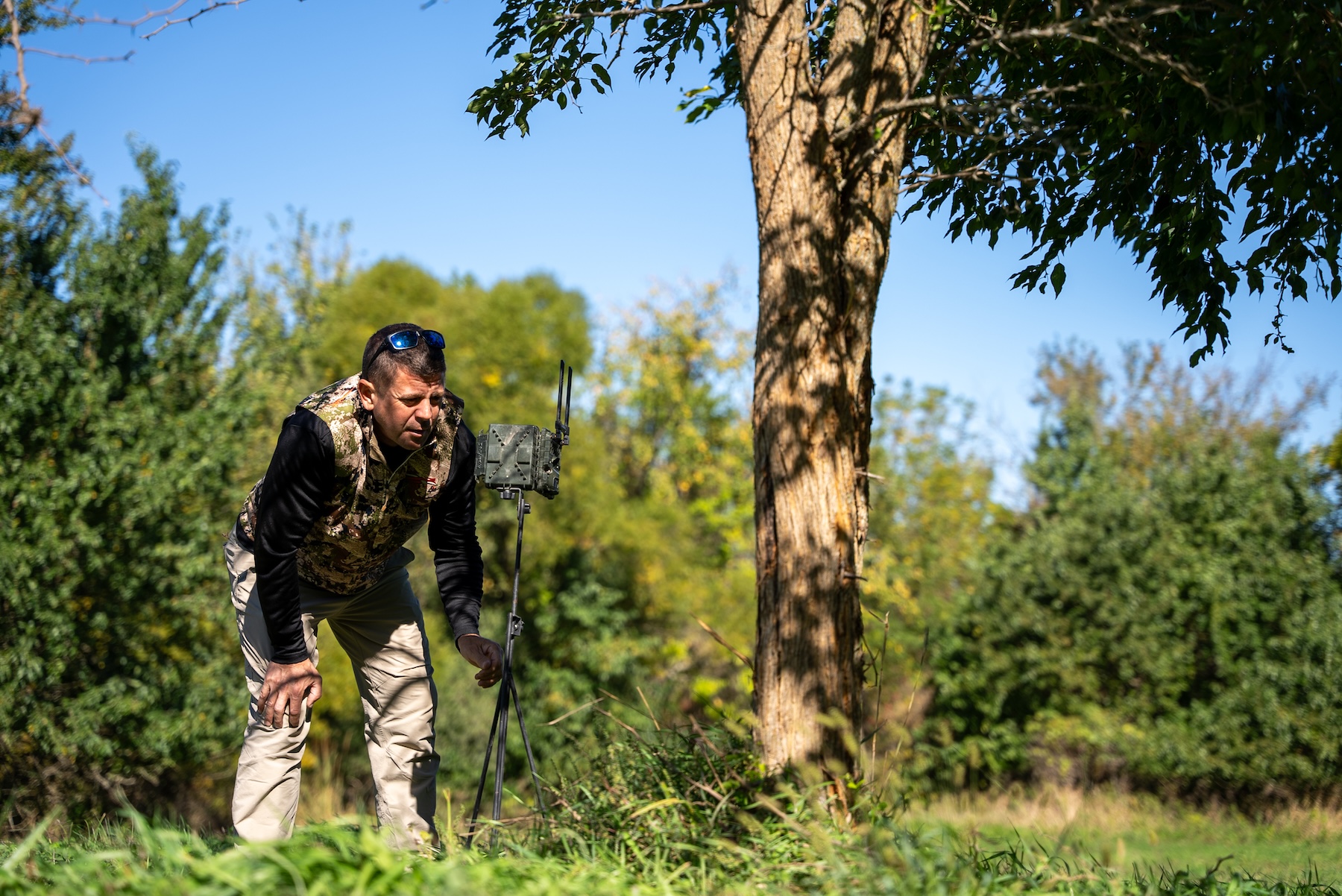
So, you ran your Reconyx SD and cellular trail cameras all throughout deer season, and several targets survived the orange army. There’s the photo of that heavy 10 with a drop tine, clean 8-pointer that’s wider than a longhorn, and an old bully buck that doesn’t score much but looks like a Brahma bull. Not to mention the slate of promising up-and-comers.
The next order of business — determine what to do with all the intel after a full season of camera use. This level of analysis requires a firm grasp on the best ways to use that collective of trail camera data, though. Obviously, assessing all of that trail camera info during the off-season can make next fall and winter significantly better.
Reasons for Running Cell Cams During the Off-Season
There are many reasons for running cellular trail cameras during the off-season. Whitetail Properties real estate agents understand this, because they live the lifestyle.
Once deer season is over, Dave Skinner, a Whitetail Properties Land Specialist in Central Kentucky, pulls some cameras for maintenance and cleanup. However, he doesn't stop running all of his cameras. While most of them come down, several remain in key locations.
“I won't stop running some of my cameras,” Skinner said. “I keep some cameras going, especially on community scrapes where I can still inventory bucks as they're growing their antlers. I might even pick up something new that I don't recognize.”
He and others do this for numerous reasons, including:
Inventorying Bucks: Determining what deer are likely to return the next season.
Analyzing Age and Antler Growth: Studying how old and big deer are getting.
Monitoring Herd Health (Year-Round): Ensuring the deer herd is healthy, and if not, what’s happening.
Scouting Year-Round Beds, Food, and Water Sources: Staying on top of how deer use the landscape, and where they bed, feed, water, and otherwise travel.
Scouting Hard-to-Reach Places: Running during the off-season, or posting cameras for long-term (one year) deployments (without checking or visiting these), in more sensitive places, such as the edges of bedding areas.
Observing Frequented Community Scrapes and Trails: Maintaining year-round observation of the deer herd by positioning trail cameras along trails and community scrapes.
Organizing and Analyzing Trail Camera Photos During the Off-Season
Part of trail camera use is organizing photos into usable packages of data. Without that, it’s impossible to analyze and glean patterns and other meaningful revelations.
Historically, this was done manually. Hunters sifted through hundreds, thousands, even millions of trail camera photos to find target buck pictures. Then, they’d study both macro and micro trends on the properties they scouted. For clarity, macro trends are collective patterns created by the entirety or most of the herd. Micro trends are unique to specific target bucks.
Of course, while the 20th and first quarter of the 21st century demanded manual labor and a lot of time to accomplish this, we now live in an age where technology achieves this step for us.
Using AI Technology to Assist with Data Management and Analysis
Skinner continues to implement some manual man hours with trail camera management and analysis. But he also uses AI to analyze his trail camera photos. The software he implements collects the photos, analyzes these, and produces highly detailed reports. Generally, these provide target-buck pattern data, effectively assisting with stand location selection, hunt timing (in relation to time of year and with key conditions), and more.
Sometimes, Skinner can even study the reports, follow the buck across the property, and determine how it moved from one spot to the next. That gives Skinner a world of information to pull from.
Of course, you don’t necessarily need AI to study these details. You can manually note the direction of travel, time of day, weather conditions, and more. It just takes much more time to do this on your own.
Inventorying All Bucks
The No. 1 reason that Skinner uses trail cameras is simple — to know what deer are on the landscape. This allows him to grasp several things:
● Overall health of the deer herd.
● How many deer live on the property.
● The age structure of bucks in the area.
● The size of antlered animals he has access to.
● And more.
“As far as how I compile my camera data, I used to be a bit of a trail camera zealot,” Skinner said. “I'm not nearly as good at it anymore, but I keep all of my buck photos, and as many as I can of the same bucks. You never know from year to year what little bit of information you might need to identify that deer going into the next season.”
Identifying Each Unique Buck on the Property
As Skinner noted, trail cameras assist greatly with identifying whitetails. Without these tools, it’d be much more difficult to pinpoint each unique deer on the property, especially those with more distant core areas and that move less during daylight.
“On a more basic level, I'm saving the pictures for as many views of a buck as I can,” Skinner said. “So, next year, if an identifiable buck shows up, I can go back in and study pictures of that unique deer.”
Skinner notes that it can be especially challenging to keep track of a younger buck that’s 1 ½ or 2 ½. That said, once a deer hits 3 ½ and 4 ½, deer are more recognizable with each new set of antlers.
Of course, although antlers change year-over-year, unless injury or illness enters the equation, most bucks tend to produce similar antler styles throughout their lifetime. For example, a deer might routinely throw specific kickers, long brow tines, noticeable mass, wide spreads, or some other repeating antler characteristic.
Antlers aside, with trail camera photos, maybe you notice the notch in a buck’s ear, scar on its side, interesting white patch, identifiable forehead coloring, or other unique traits that make identification simpler.
Skinner also points to bodily characteristics as ways to identify specific bucks, especially when antlers unexpectedly change greatly. One deer he points to was a buck that lost about 75 pounds and 80 inches of an antler in one year.
“I don't know what happened, but he went so drastically downhill that he was unrecognizable,” Skinner said. “Still, I was able to go back to old pictures and notice a few little things that led me to believe this buck was that deer.”
Patterning Current and Future Target Bucks
Despite being best positioned for inventory, trail cameras remain viable tools for patterning current and future target bucks.
“I mainly use my trail cameras for inventory,” Skinner said. “It’s not as much for scouting anymore. Here's why — a trail camera gives you a moment in time.”
He still uses cams for patterning, though. Of course, trail cameras remain excellent scouting tools. That said, these should never be a person’s sole scouting method. Rather, it’s crucial to use these in conjunction with all other options, such as glassing from afar and putting boots on the ground. It’s also important to watch how deer behave around trail cameras while hunting in the field.
“I hear people all the time say, ‘he's coming in from the right, so I think he's bedded over there,’” Skinner said. “Well, odds are that deer circled that camera, circled the area, or did something else. He didn't really come from the right. So, I don't use them as much for directional scouting.
“That doesn't mean I can't tell a buck’s direction of travel through trail cameras, though,” Skinner continued.
More specifically, when a buck hits multiple trail cameras in a short span of time, that provides excellent direction of travel data. Multiple location data points can indicate bed-to-feed, feed-to-bed, and other notable travel routes. It can point to where a deer spends most of its daylight hours, which is the most vital piece of the scouting puzzle.
Identifying Buck Patterns, Trends, and Other Useful Information
Some hunters choose to take their trail camera analysis to the next level. They implement advanced strategies to visualize buck patterns, herd trends, and other great info.
“Really dial-in on the scouting,” Skinner said. “See how that deer is moving across the landscape. Does he take the route you think he does? With multiple cameras and scouting, this can give you some information on how he was moving and the directions on given dates.
Overall, hunters can study trail camera data from the past season(s) to analyze where deer are spending the most time. Drill down on core areas, preferred bedding, desirable food sources, frequented trails, etc.
“I might think he's in this or that area, but this type of scouting confirms it,” Skinner said. “Plus, maybe he's more huntable in one area or another. Perhaps he's here or there more in the daytime.”
Parlaying Processed Data Into Excellent Hunting Plans and Filled Deer Tags
The best deer hunters parlay processed data from trail cameras into excellent hunt plans. Obviously, that translates to more filled tags and bigger bucks.
“That's the way I use cameras the most during the off-season — inventory and identifying bucks that come back each year,” Skinner said. “I want multiple years of that data.”
Smarter hunt plans allow deer hunters to choose better stand locations, minimize hunting pressure, amend hunting strategies, prioritize hunting days, and much more. While we should never rely on trail cameras as the only scouting method, it’s highly effective and a significant piece of the scouting puzzle.
“A few years ago, I had a buck on a property,” Skinner said. “I had that deer nailed down transitioning from one end of the farm to the other. He did so almost the exact same day three years in a row. I had another big buck that always returned October 15-17.”
That’s the power of trail cameras.
Frequently Asked Questions (FAQs) for Advanced Trail Cam Techniques
Q: What are the trail camera data points that are most important for analysis?
A: Focus on direction of travel, multiple trail camera intercepts of the same buck in a short time, wind directions and other weather factors associated with the timestamp on target buck photos, and more.
Q: What if I can’t identify patterns for specific target bucks?
A: Continue to use trail cameras to procure valuable information. Additionally, use in-the-field scouting methods, such as glassing from afar, hunting from observation stands, and when needed, moving in to find fresh deer sign.
Q: What if I’m only receiving nighttime photos of a target buck?
A: Either your trail cameras are in the wrong places, and are just missing daytime movement, or the deer is bedding too far from cameras to reach these during legal shooting hours.
Q: How do I choose the best stand locations based on trail camera data?
A: Consider important factors, such as bedding areas, feeding areas, water sources, travel routes, and wind direction. Furthermore, ensure your access routes, such as entry and exit paths, don’t alert deer to your presence visually, audibly, or olfactorily.