Hunting
How to Glass and Spot More Deer During the Hunt
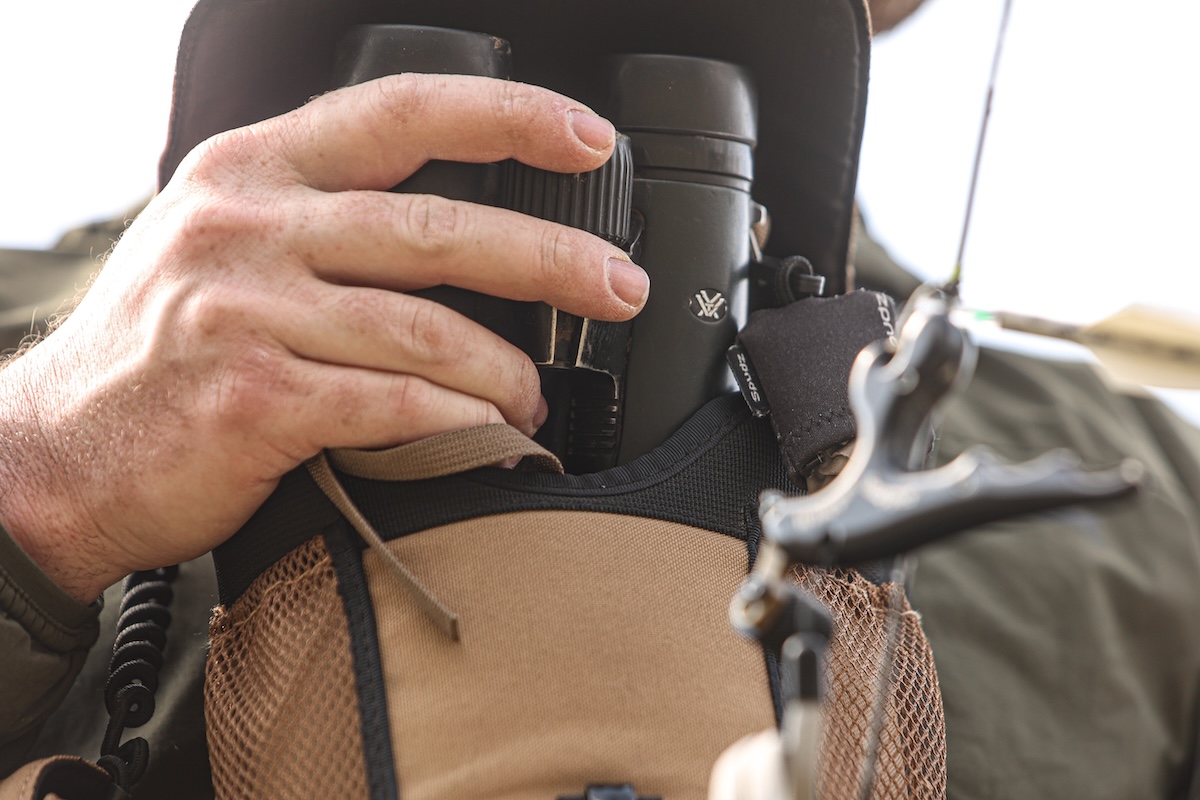
Knowing how to glass deer, and how to spot more big game during the hunt, is a crucial part of whitetail sightings and other big game spotting. Glassing during the hunt is a very defined and specific skill. For those wanting tips and tactics to glass more deer, elk, moose, and other big game animals, read on for our detailed guide on glassing.
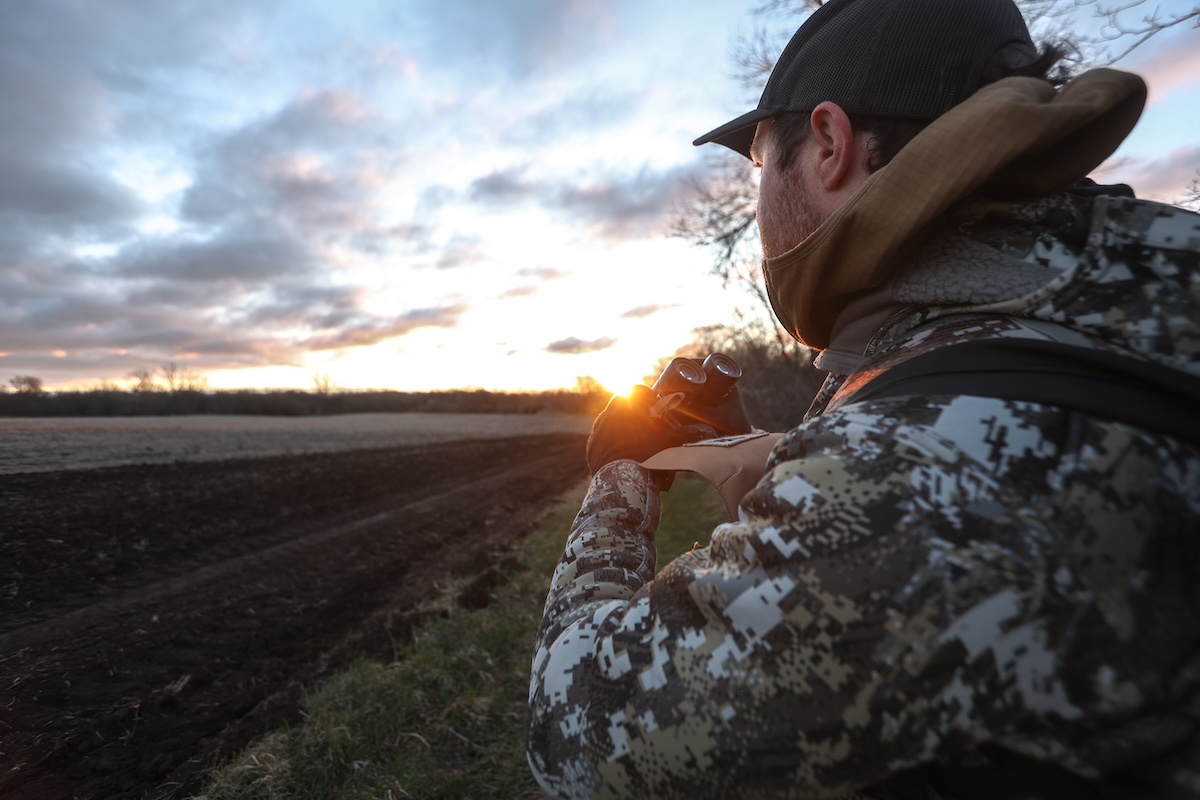
Get Into Position Before First Light
Whitetails are crepuscular animals, meaning they move most at dawn and dusk. These are the ideal times to see deer on their feet. So, choose your glassing vantage and be there well before the first light begins. This allows you to minimize odds of spooking deer. It also places you in the game with maximum time and odds of spotting the deer you’re after.
Keep the Sun at Your Back or Side
There’s nothing more challenging or frustrating than attempting to glass into the sun. Glassing toward the east early of a morning, or toward the west late of an afternoon, makes for difficult scouting from afar conditions. Rather, when possible, try to keep the sun at your back. At worst, maintain a position that is perpendicular to the path of the sun.
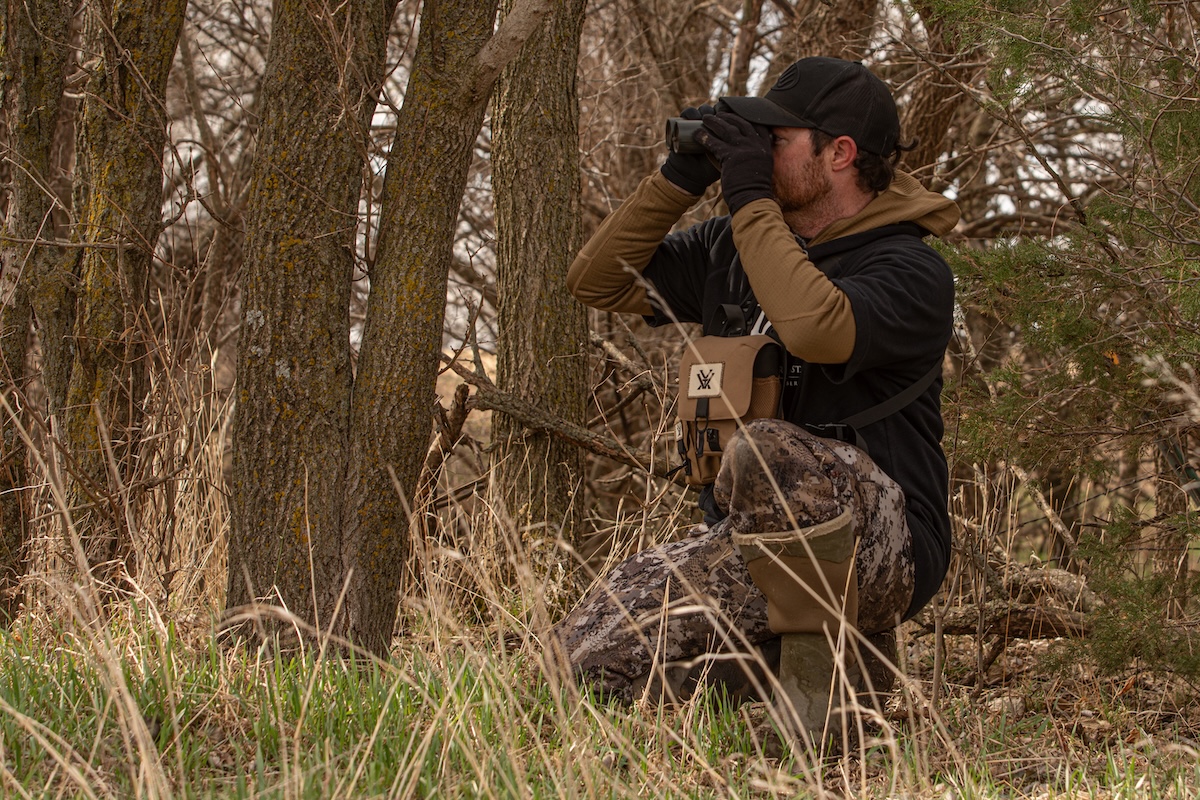
Consider Your Scent in Relation to Prevailing Wind Directions and Thermals
Just because you have the glass in your hands, and not a weapon, doesn’t mean a deer can’t smell you. They don’t know the difference between a hunter who’s scouting and one that just flipped off the safety. Always be mindful of where prevailing wind directions and thermals carry your scent. Take up positions that do not send scent downrange into undesirable areas where deer (especially target bucks) spend time.
Use a Monopod, Bipod, or Tripod with Your Glass
Glassing short distances rarely requires stability. Glassing moderate to long distances most certainly demands it, though. To accomplish this, use a monopod, bipod, or tripod while glassing. This steadies you up and makes it easier to spot slight movements, such as the flick of a tail or tilt of an antler tine.
"The biggest thing for me is carrying a fairly stable, but lightweight tripod,” said Rob Herrmann, a Whitetail Properties Land Specialist in Colorado. “Tripods are definitely going to change the game for you as far as being stable but also being able to pick a hillside apart piece by piece.
"Shooting across the way by hand, you can definitely get it done, but it's a lot easier to keep your place and locate some deer on a hillside,” Herrmann continued. “You're not going to lose them right away."
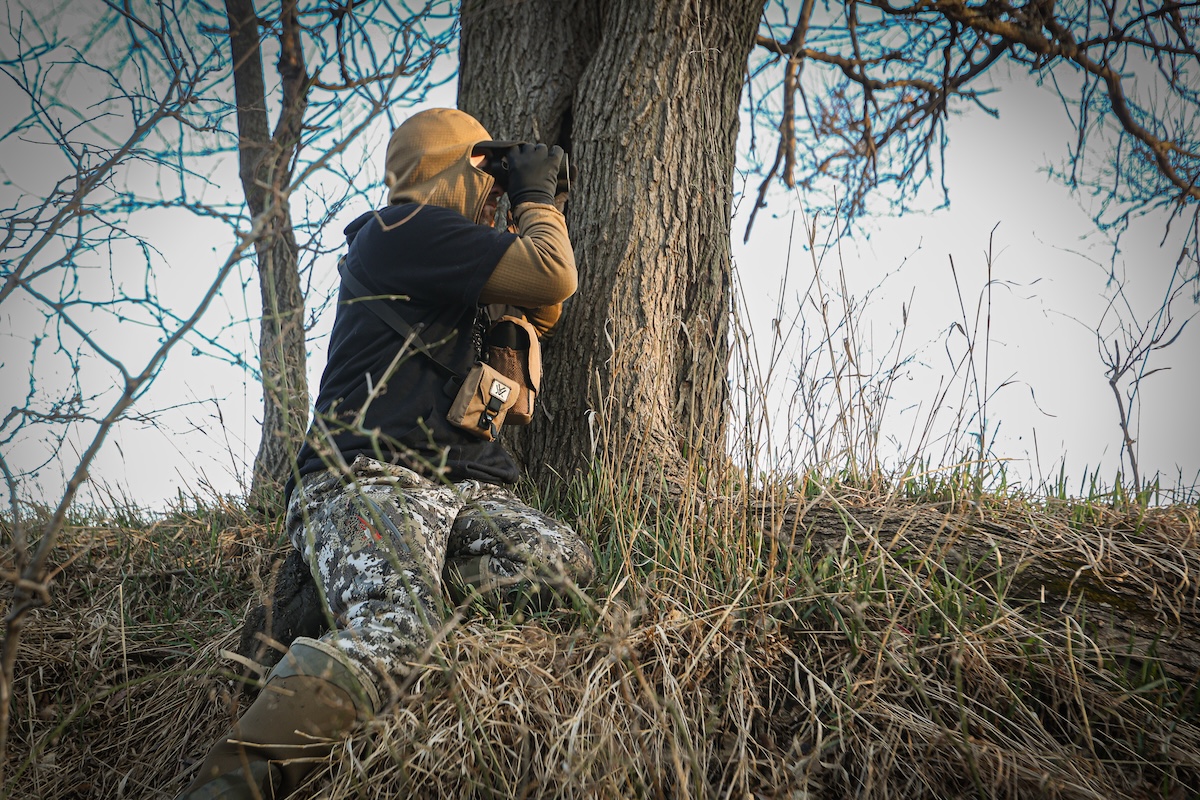
Anchor Elbows with Something Sturdy
Many hunters glass without enough stability. No rest. Elbows flared out. Shaking or swaying viewfinder. That barely catches and adequately gauges the deer standing in the open at short to moderate distance. It certainly doesn’t locate a bedded deer in the thick stuff or fleeting buck trotting through the distant timber.
Use Your Hat Brim for Stability and Light Management
For some, they might not have a set of sticks to rest on. Or, they don’t have time to get it out and settled on fleeting game animals. Maybe they’re even in an elevated treestand where optics monopods, bipods, and tripods aren’t ideal. In a pinch, or in conjunction with aforementioned stability methods, use your hat brim to minimize unwanted motion. (Pinch the binos up against the brim.) Furthermore, use the brim to shield bright light that interferes with the field of view.
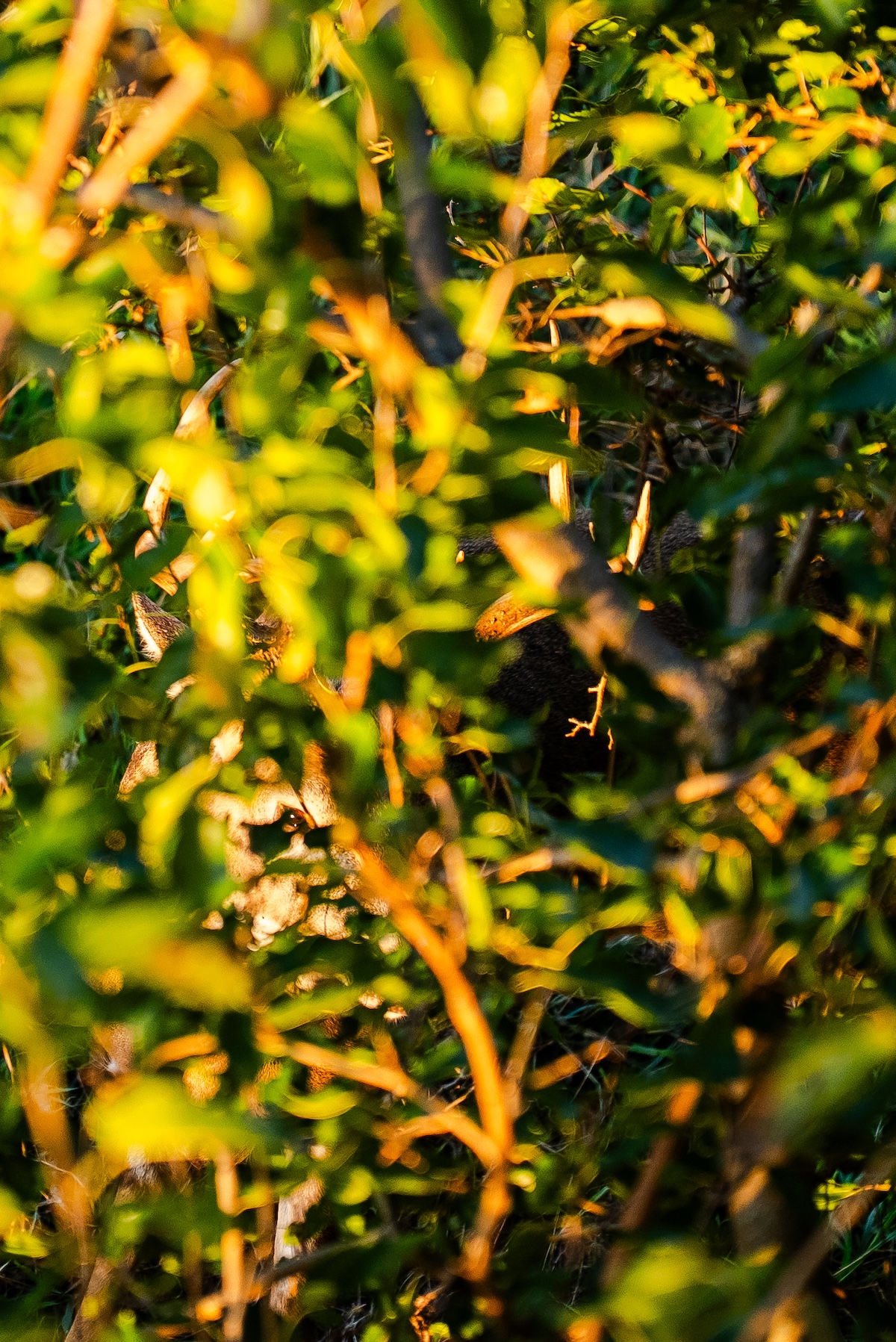
Look for Parts of Deer (Not Entire Deer)
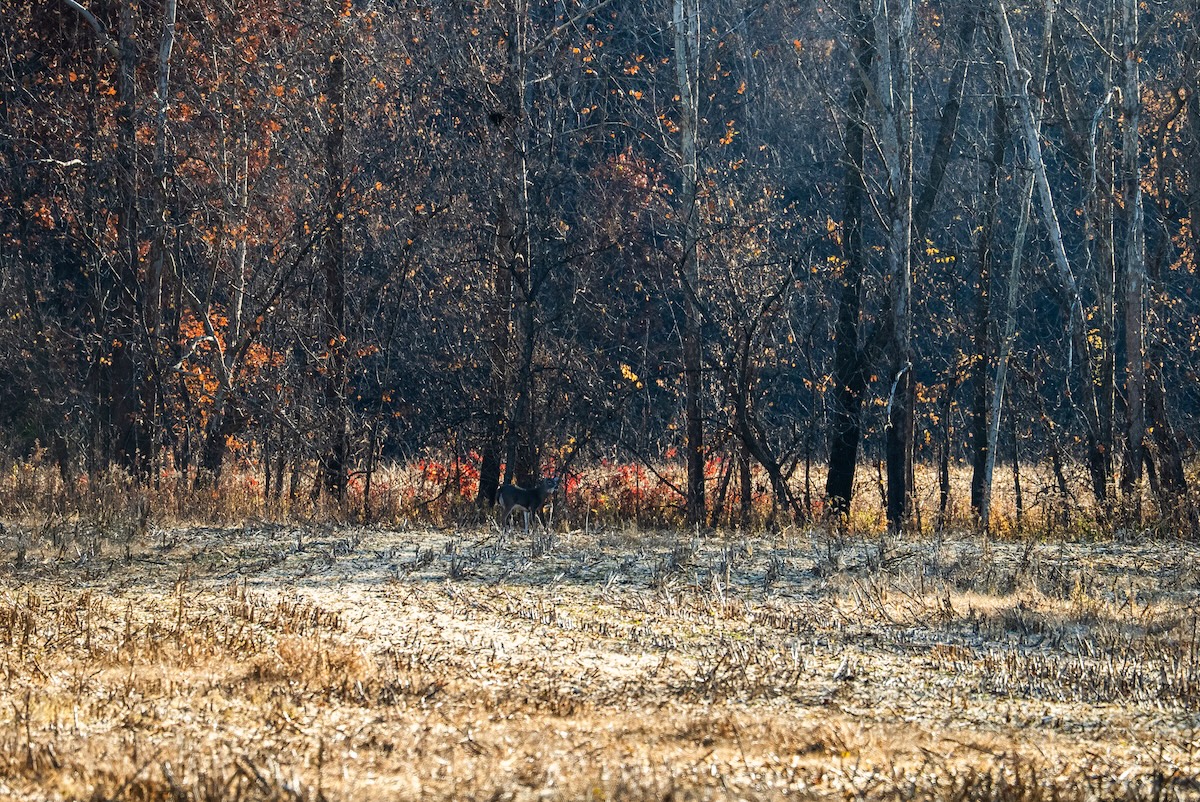
Glassing for an entire deer will spot those that are easiest to see. You know, the deer standing in the field, edge of the timber, or otherwise in the open. However, it will not catch the hard-to-see buck that’s beyond some brush or trailing a doe through areas with higher stem counts. To see more whitetails and other big game animals while glassing, look for parts of deer, and not the entire animal. Look for an ear, antler tine, swishing tail, etc. Better yet, search for patterns that look out of place, such as brown fur against scaly gray tree trunks or solid deer hide amidst a hodgepodge of leaves and other forest duff.
Search for Unnatural Colors, Textures, and Other Things “Out of Place”
As just noted, look for clues that might give away a difficult-to-see deer. Look for colors that appear slightly out of place, such as a white belly. Search for fur textures, antlers intersecting with horizontal libs, and other mismatched shapes and hues that don’t naturally belong overlaid. Locating these tell-tale signs will deliver more desirable glassing results.
Train the Eye to See Through Brush
Glassing through cover is a skill in itself. Hunters should focus on training the eye to see through various levels and depths of brush. Begin with the surface level. Then, zoom out with your focus. Continue scanning each depth beyond (through) visual obstructions until you’ve addressed each visible linear distance.
Shift Viewing Angles When Needed to Pinpoint a Deer
Whitetails see much differently than humans, and they are known for their poor depth perception. This is, in part, why they “head bob” when trying to get a look at something they don’t like. They’re attempting to get different looks from various angles to piece together the entire picture. While not always necessary for hunters, when needed, use that same mentality. Shift viewing angles when needed to pinpoint or get a better look at a deer.
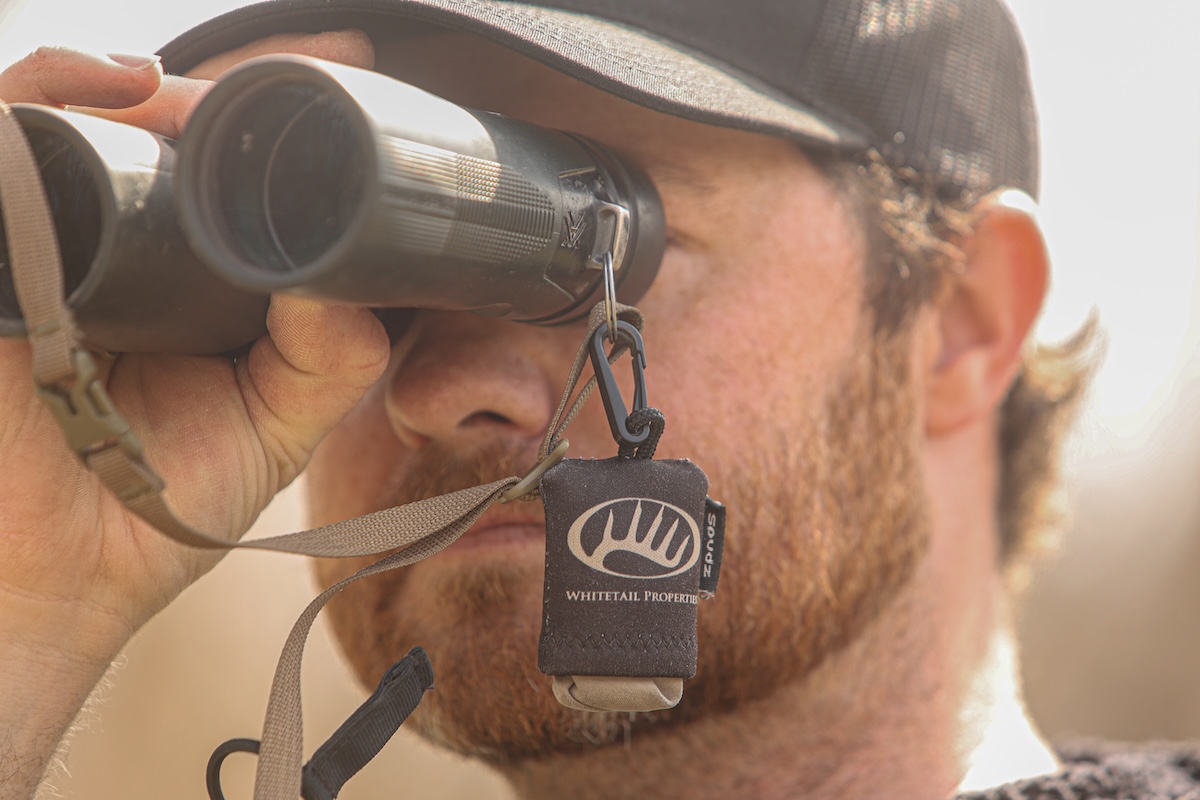
Conceal Reflections and Other Detectable Movements
Whitetails are good at detecting small details, especially in terms of movement. When glassing, conceal detectable movements. Furthermore, prevent reflections by avoiding glassing toward the sun. Lens flare can cause nearby deer to react negatively. (Opening or closing a glass or plastic blind window can do the same.)
Grid Search with the Glass
Many hunters glass in organic patterns. That’s not the correct method to deploy, though. Instead, grid search via a geometric pattern. Check off one square grid at a time. Work left to right and top to bottom in a natural reading-style pattern. This will subconsciously allow you to more effectively cover the area and not miss anything within the grid pattern.
"If you can get to a good glassing point in Colorado, you're gonna have a really [good] vantage point,” Herrmann said. “You're gonna have a lot of ground to look at.
"Come up with a little bit of a grid,” Herrmann continued. “Generally, I'll work left to right on the hillside, go up and down, and just make sure you cover as much ground as you can.”
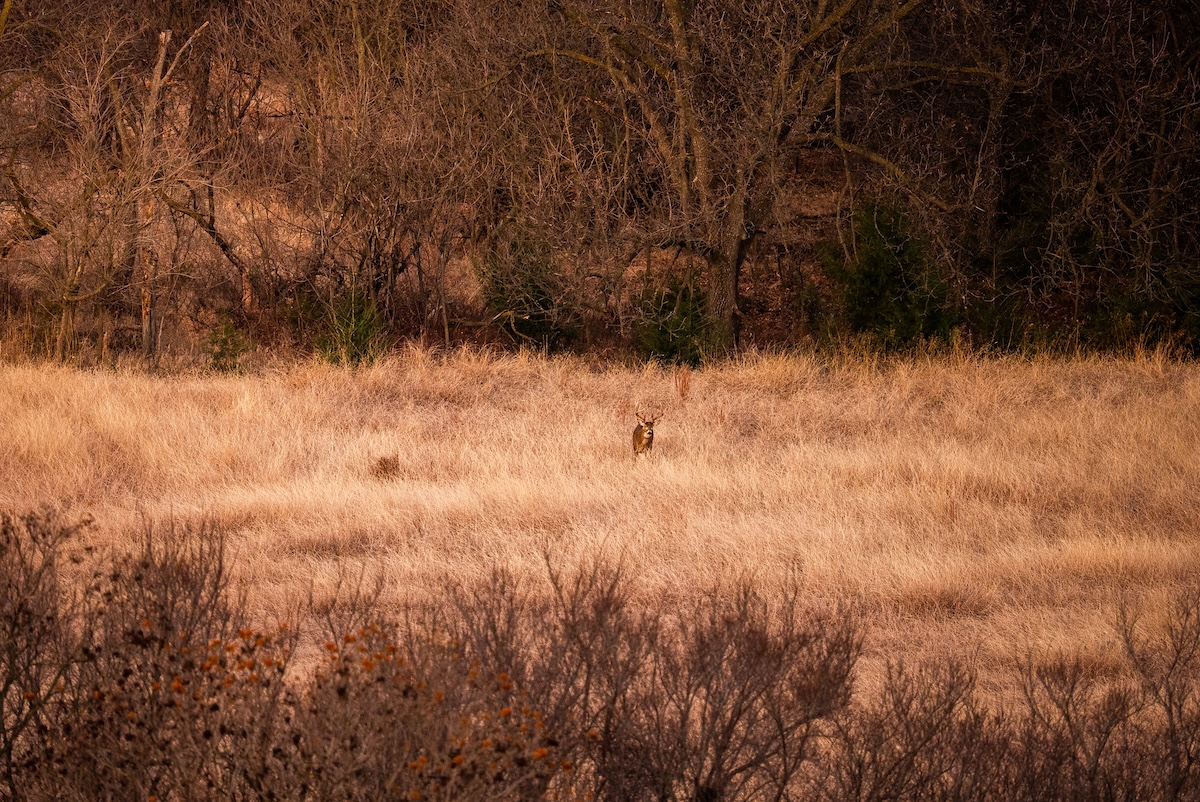
Start Closer and Work Outward
In most glassing scenarios, it’s best to start close and work outward. In the event a deer is closer and working away, this helps you see the animal before it gets out of range. It also gives you more time to field judge the deer before committing to taking a shot.
Use an Overlapping Field of View with Each Pass
Grid-search glassing is the game but ensures an overlapping field of view with each pass. This allows you to be certain that all areas are searched. It also increases the likelihood of seeing a deer that was on the move and cruised out of an unsearched grid into one you previously checked.
Spend Extra Time Glassing Edge Cover
Some areas deserve more time behind the glass than others. Open settings can be observed rather quickly. Thick, early successional cover must be thoroughly searched, though. Therefore, spend extra time glassing along the edge cover.
"Generally speaking, with whitetail, you're gonna be working on a little bit smaller of a space,” Herrmann said. “You probably have a little better idea of where they're gonna be also."
Remember, with whitetails, edge cover is key. That’s sometimes true for other big game cervids, but not always.
"In the mountains, mule deer and elk both can basically be just about anywhere,” Herrmann said. “They're a little less predictable, [which] makes you do a little bit more work on the glass. Overall, [it is] the same principles, just a very different country than you're used to working with on whitetail.”
When You See Game, Remember Nearby Landmarks
Glassing a large area can make it difficult to remember where spotted animals were located. If you have to relocate to get a shot, things look vastly different, meaning it’s easy to lose where they were originally spotted.
"I'm just using some landmarks, making sure that I recognize key spaces,” Herrmann said. “So, if I do find some animals, I can relocate them.”
Remain Comfortable Behind the Glass
Glassing for hours on end is part of big game hunting, especially in open settings. It’s crucial to remain comfortable behind the glass. Take routine breaks to rest your eyes. Stretch your arms, legs, and other muscles. Eventually, fatigue sets in. Manage it accordingly.
Double Up with the Dual Optic Approach
Lastly, when necessary, use more than one optic. For example, in the Great Plains, mountain country, western landscapes, and other open terrain, use the dual optic approach. Grid search your field of view with binoculars. Upon spotting something of interest, or to better gauge a potential target animal, use a higher-powered spotting scope for a better view.
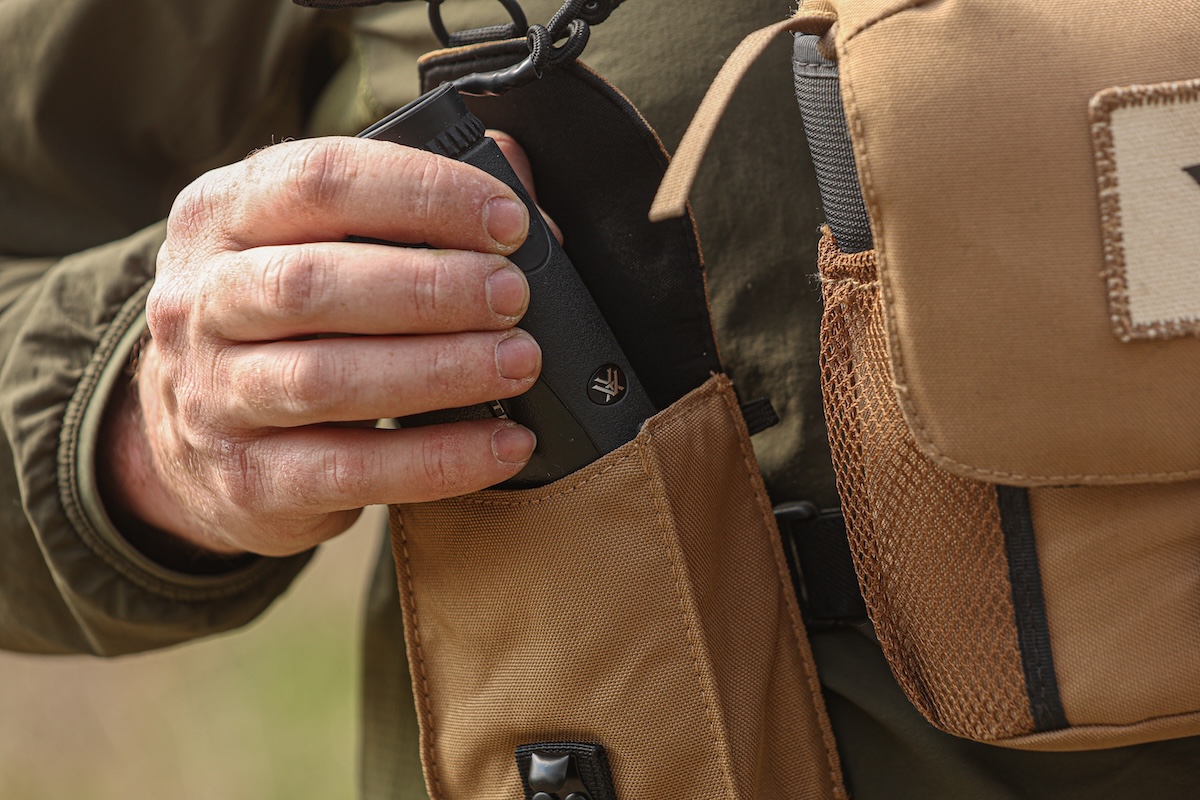
Choose the Right Glass
Deer season, and other fall big game ventures, are officially here. It’s time to get behind the glass and locate the big one you’ve dreamed about all spring and summer. To be more efficient, choose the right glass for your hunt.
Our Vortex binocular recommendations include the Razor UHD 8x32, Razor UHD 8x42, Talon HD 10K 10x42, Razor UHD 10x50, Talon HD 10K 12x50, and Razor UHD 18x56.
"I generally use a 12x50 binocular because I like having a little bit more reach,” Herrmann said. “You're still going to have a wider field of view than you do with a spotting scope."
Those needing a quality spotting scope might look at the Razor and Viper lineups.
"There's a lot of value to them, but I still like to scan a hillside with binoculars beforehand,” Herrmann said. “If you do find something and ... need a deeper look at it, that's where a spotting scope definitely comes in handy."
A few reliable tripods include the High Country, Mountain Pass, Ridgeview, and Summit Carbon II. To fight the glare, check out the Banshee and Jackal glasses. Once fully equipped, go enjoy the hunt of your dreams.
For landowners looking to sell their land, contact a Whitetail Properties Land Specialist today. We can answer questions and help with your real estate needs. For buyers hoping to purchase land, check out some of the available listings near you.