Knowledge Center
America’s Most Hated: The 18 Worst Invasive Plant Species in the U.S.
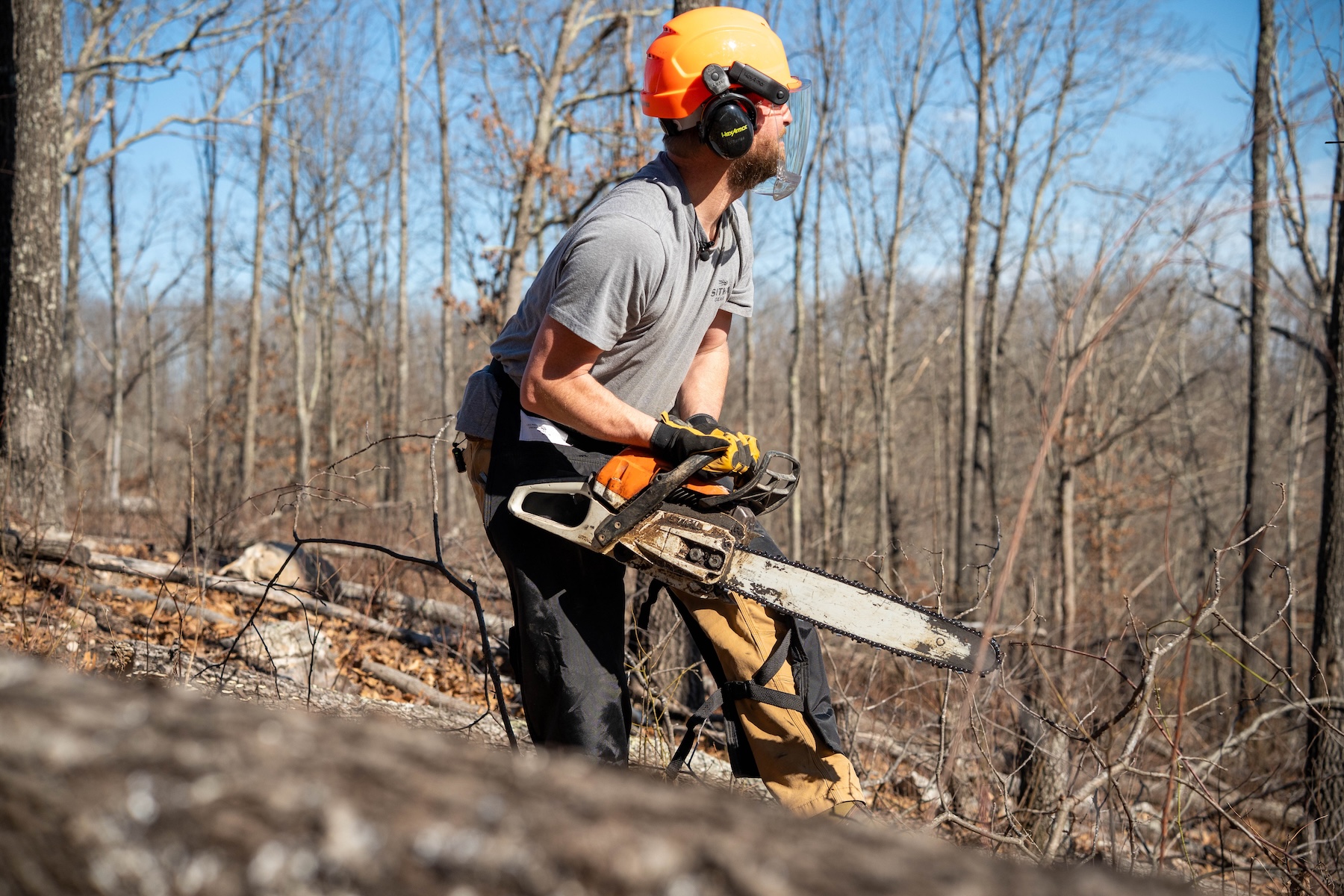
America’s most hated non-native plant species. While deer and other wildlife benefit from some, others are entirely useless. If you’re tired of the invasives, it’s time to lace up those LaCrosse boots, fire up the John Deere skid steer, and hitch up the Quick Attach brush shredder. It’s a bad day to be autumn olive, bush honeysuckle, kudzu, multiflora rose, and all the other nasty non-natives that found an unwelcoming home in America. It’s time to convert them into mulch, dead plants left standing, or maybe even a nice, hot bonfire.
The Threat of Invasive Plant Species in America
America's worst invasive plant species — what are they? Truth be told, there are hundreds, perhaps thousands, wreaking havoc on North America.
Sure, the intruders vary by region, and some are more widespread than others, but all pose threats to native plants, native wildlife, American crops, and even economies. Without a doubt, all listed below, and more, pose grave ecological risks. In some cases, they’re wreaking true havoc on America’s bold and beautiful wild places.
1. Autumn Olive
The infamous autumn olive is a deciduous shrub that takes over in rapid fashion. Recognize it by its leaves with silver speckles and red berries. It was originally introduced for erosion control, and it reaches upward of 20 feet tall. Where one grows, a lot of these follow.
“Autumn olive is another one,” said Matt Ross, National Deer Association (NDA) director of conservation. “They make pretty thick cover and deer get in it, but they prevent some of the other plants that you'd want to grow there, especially if you're trying to maintain it with fire. Plus, they can shade out entire areas.”
2. Bermuda Grass
Another invasive but highly common plant, Bermuda grass is a warm-season species that grows fast and is highly tolerant to drought. It’s common in sunny areas. Recognize it via the grayish-green blades.
3. Bush Honeysuckle
One of the most common invasive species in America, bush honeysuckle can reach up to 20 feet tall. These are large, sprawling shrubs, and they often dominate landscapes. Flowers are yellow to white and berries are bright red.
“Some species of honeysuckle that are non-native will grow in open settings, especially in fields that are recolonizing,” Ross said. “Bush honeysuckle is bad.” But there are other poor varieties of it.
4. Chinaberry
According to Ross, Chinaberry is another one that often plagues properties in the Southeast. It too grows rapidly, spreads easily, and dominates landscapes. This deciduous tree has lavender flowers and yellow berries. It’s even poisonous to humans and some pets.
5. Chinese Climbing Fern
A vining perennial, the Chinese climbing fern is common in states throughout the South. It climbs over shrubs, up trees, and reaches 90 feet in length. Generally, its spores spread via wind and rhizomes found in the soil. It’s incredibly challenging to manage.
“There is an invasive climbing fern throughout the Southeast,” Ross said. “It's called the Chinese climbing fern. It’s a newer one to the picture, but no less detrimental.
6. Chinese Privet
Growing into a large shrub or small tree, Chinese privet is commonly used as an ornamental. Oftentimes, it turns into dense stands of these terrible growths. Recognize these by the “hairy” twigs, white flowers, and unique leaves. While some only stand 5-10 feet tall, others tower 25 feet or more.
7. Chinese and Japanese Wisteria
Two fast-acting deciduous vines, these woody plants smell great but are bad for land management. Flowers are hanging and white or lavender in color. Interestingly, Japanese wisteria climbs clockwise and Chinese wisteria climbs counterclockwise. The Chinese variety has about 10-13 leaflets and deep roots, while the Japanese variety has approximately 15-18 leaflets and widespread root systems.
8. Cogan Grass
Cogan grass is a very invasive perennial grass. It arrived in America from Asia and Africa. Once introduced, it quickly spreads into dense coverings that smother everything else. It can grow up to 7 feet tall. It has bright green leaves with rough, serrated edges and large, tan seedheads.
“In the Southeast, Cogan grass is a grass species that grows in forest settings,” Ross said. “It can be highly problematic.”
9. English Ivy
An evergreen vine, English Ivy is one of the worst invasive tree killers. It climbs trees, adds detrimental weight, and blocks light. It thrives in partial to full shade and reaches up to 90 feet in length. It even harbors and spreads diseases that are fatal to many native plant species.
10. European Buckthorn
The undesirable European buckthorn is a large shrub to small tree that averages 15-30 feet tall. It arrived from both Asia and Europe. Today, it’s all over much of America, and disperses to nearby and completely new areas rather quickly in large part due to birds.
“In the Northeast and parts of the Great Lakes states, one invasive plant is the European buckthorn,” Ross said. “This is a small, sapling-size tree that’s problematic. It will fill in the understory.”
11. Japanese Barberry
A deciduous shrub, Japanese barberry is a tree that has no place here, but it’s proliferating anyway. In the fall, it has bright-red foliage and usually yellow-colored bark. It also has sharp spines and creates thorn-laden thickets. The plant spreads fast, grows up to 6 feet tall, and doesn’t give up.
“Japanese barberry, which is in parts of southern New England and New York State, is found in forested settings,” Ross said.
12. Japanese Knotweed
Japanese knotweed is a perennial shrub that can reach up to 15 feet tall. The stems are bamboo-like in nature, leaves have pointed tips, and flowers are white and appear in clusters. It’s especially known for its destructive root system, which can penetrate hard surfaces, such as asphalt, concrete, foundations, and more.
13. Japanese Stilt Grass
One of the worst grasses to have, Japanese stilt grass is a warm-season annual, and it isn’t one you want on the property. Its green leaves are long, slender, and pointed. It can grow up to 3 feet tall. Fortunately, the root systems are easy to pull.
“Japanese stilt grass, or Japan grass, as some people call it, is problematic, too,” Ross said. “It grows in forested settings. It does really well in the shade. This one commonly fills in forested roads and other areas so that herbaceous plants can’t grow.”
14. Kudzu
“Kudzu is a vine that actually does have some benefits for deer, because they will eat it,” Ross said. “But it completely climbs over the tops of and shades out other plants. It is insane. It's not native and it is a true invasive. Still, deer will browse it.”
Unfortunately, it’s only viable as a food source during the warm season. Once fall and winter arrive, it creates a wasteland with entire areas void of viable habitat. Deer don’t eat it when deer have the least access to food, and because it shades everything out, nothing else can grow, either. It’s estimated to cover more than 7 million acres in the Southeastern U.S. alone.
15. Multiflora Rose
Multiflora rose is another one to watch for. Introduced for erosion control, it’s sense accomplished that and much more, but not in a good way. Today, it’s an ecological disaster. Notice its white flowers, red rose hips, and sprawling frames.
“It's right there with Japanese barberry,” Ross said. “Multiflora rose exists throughout a lot of the Great Lakes and part of the Northeast. It’s also in some of the mid-Atlantic states.”
16. Sericea Lespedeza
Also known as Chinese bush clover, Sericea lespedeza is a perennial legume. It forms dense colonies, grows up to 5 feet tall, and can produce more than 1,000 seeds per plant. The dark-green leaves are wedge shaped and it puts on cream- and purple-colored flowers in summer.
17. Tree of Heaven
Some might have heard of Ailanthus, which is also referred to as the tree of heaven. Contrary to its name, this species isn’t heavenly at all. Rather, it brings a living land management hell right to the properties it grows on.
“This is a woody plant that grows in Kentucky and extends up to the Great Lakes and parts of the North," Ross said. “Tree of heaven is a big problem and there are a lot of these plants on the landscape.”
It operates by releasing deadly toxins into the soil that kill nearby plants. Over time, things can’t grow, and the undesirable tree spreads. Also, it plays host to the spotted lanternfly, which in itself is another invasive species.
This plant requires specific management practices. You can’t merely cut it down. Doing that without the aid of herbicides spurs it into overdrive, and numerous sprouts come up from the root system. Chop off one head, and numerous arise to replace it. It’s the stuff of flora nightmares.
18. Winged Euonymus (Burning Bush)
The hated winged euonymus is commonly referred to as burning bush. This deciduous shrub is usually 10-15 feet tall at maturity. The twigs are notably cork shaped. It produces green leaves in spring and summer but converts to dark-red foliage in the fall. Without a doubt, it’s among the most invasive species in the nation.
Other Invasive Plant Species Worth Mentioning
The above highlights aren’t the only invasive plant species in America to watch out for. There are other invasive plant species worth managing. Just a few of these include the Bradford pear, Canada thistle, cheatgrass, European privet, garlic mustard, giant hogweed, Japanese angelic tree, Japanese honeysuckle, leafy spurge, mile-a-minute weed, Norway maple, oriental bittersweet, periwinkle, purple loosestrife, running bamboo, Russian olive, silktree, tamarisk, water hyacinth, wintercreeper, yellow flag iris, yellow starthistle, and many more. Whenever possible, remove these invasive species according to best practices, and replace them with better native alternatives.
The Future of Managing Invasive Plant Species
The future of managing invasive plant species is in your hands. It’s up to private landowners, and those who manage public properties, to control America’s most hated non-natives. It takes grit to remove the worst invasive plant species in the U.S. But there’s also a lot of help available. “There is a lot of information about these and how to manage them,” Ross said. “I know there are always discussions about invasive plants and whether or not we can truly remove them all.”
Of course, some still believe that invasive species can be completely eradicated. They attack these foes with the fervor of Braveheart’s fabled William Wallace. Synonymously, in the end, all of us who push back on these invasives eventually die, and they’re still around long after we’re gone.
“A lot of these plants are just a fact of life,” Ross said. “They're here. It shouldn't be perceived as a realistic thing that you will completely remove them permanently, and they're naturalized now. They're here. It's just a matter of life managing them so that they are not at a level where it prevents some of the more beneficial plants from being there.
“People see some invasives and think they make really thick cover for deer bedding,” Ross continued. “And that's true. There is nothing to say that you can't manage some pockets of your property that actually have that stuff. It's just a matter of realizing what they're taking away.
For more information, check out the NDA’s resources on embarking on invasive species management, native alternatives to commonly planted non-native species, and bad tree species to hinge, girdle, or fell. For more questions about your own property, contact a Whitetail Properties Land Specialists near you.